
My granddaughter Nora was fifteen last spring and had recently appointed herself the recycling police of the family. She opened the deep kitchen drawer under the counter, the one where I keep the bags, and counted the zip-top bags in there out loud. Not to be cruel. She was genuinely curious. She got to forty-one and stopped, and then she looked at me the way only a teenager can, which is to say with total sincerity and no mercy at all.
I am sixty-eight, retired from school libraries, and I live alone in a split-level in Loveland, Colorado. Forty-one plastic bags in a drawer did not feel like a crisis to me. It felt like a drawer. But Nora had a point and she made it politely, and I have never been able to leave a polite argument alone. So I bought the Stasher Premium Reusable Silicone Food Storage Bags, the 4-pack, in the second week of April, and I have used them hard for a year. This is the honest version of that year, including the parts that annoyed me and the parts I would have skipped if anyone had warned me first.
The Quick Verdict
Genuinely useful, genuinely leak resistant, and genuinely worth it for freezing garden surplus and packing lunches. It will not replace every zip-top bag, and the staining and the drying are real annoyances nobody mentions.
Amazon Check Today's Price →For garden surplus and school lunches, the half gallon and the sandwich bags are the ones you will actually reach for.
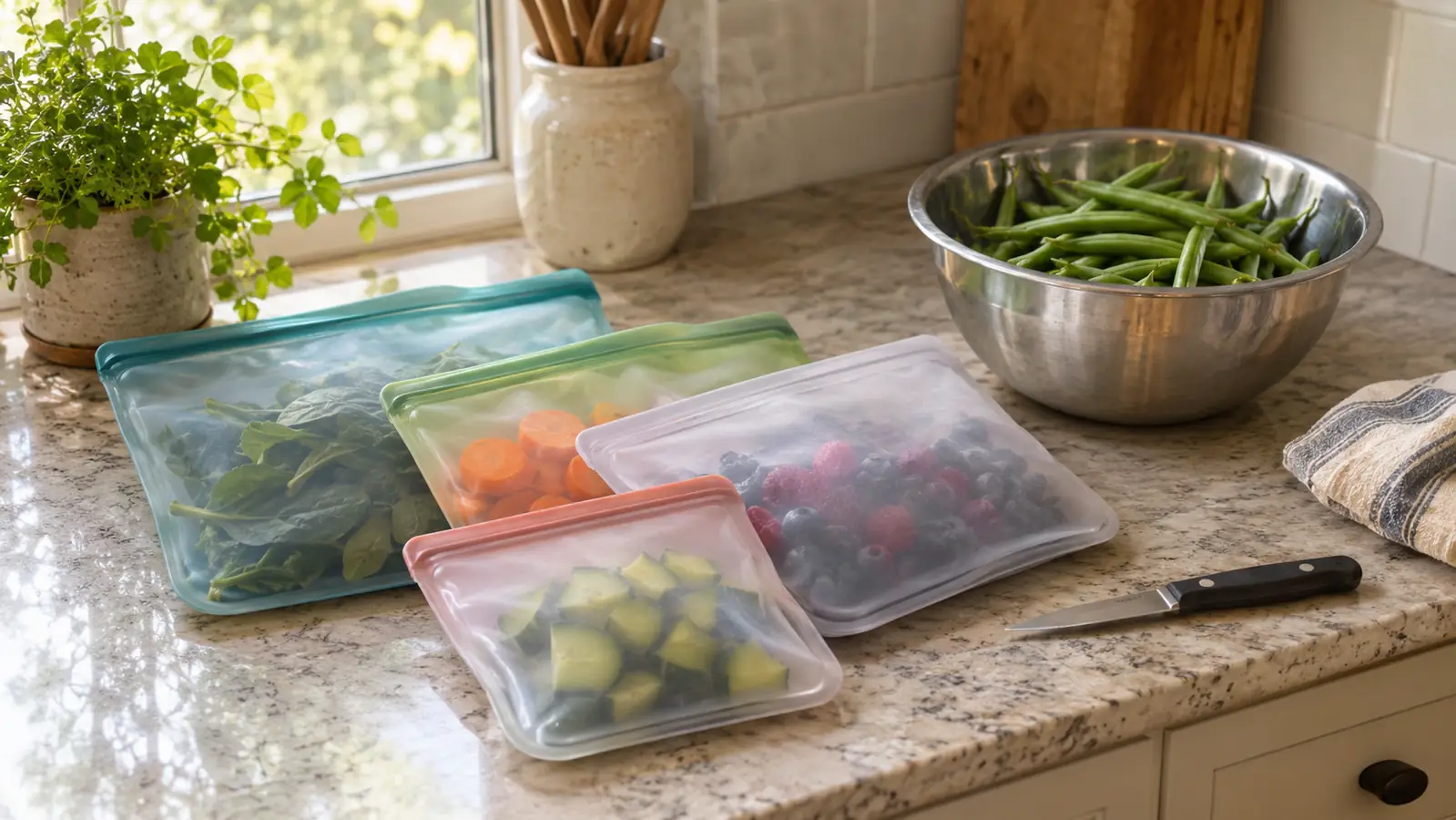
One bag is meant to replace 260 single-use bags a year, which is how the math works out in your favor over time. The 4-pack is one half gallon at 64 ounces, two sandwich bags at 28 ounces each, and one snack bag at 12 ounces.
Amazon Check Today's Price on Amazon →What I Liked
- The self-seal channel held through a sideways ride in a tote bag to Fort Collins
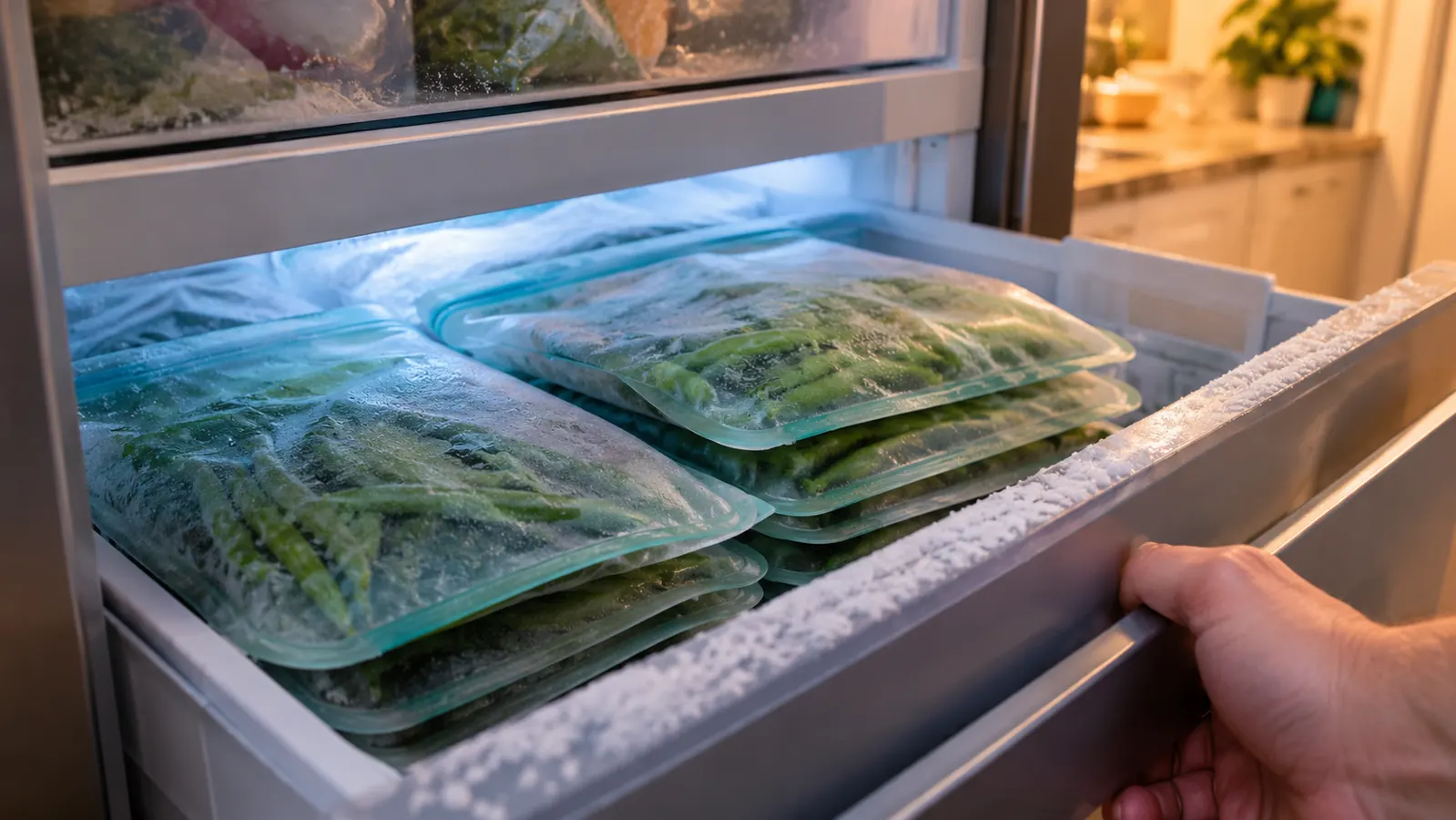
- The half gallon takes an entire picking of green beans and lies flat in the freezer like a book
- Dishwasher, microwave and oven safe to 425 degrees, so thawing happens in the bag instead of a bowl
- A full year of weekly use with no split seams, no torn corners and no cracking in the cold
- Cut the zip-top bag drawer down to a handful, which was the actual goal
Where It Falls Short
- Silicone takes on color from tomatoes and does not give it back, no matter what you scrub it with
- No click when it seals, so you have to run a thumb along the channel to be sure
- Comes out of the dishwasher wet and stays wet unless you prop it open to dry
- The 12 ounce snack bag is a size without a job in a house with a twelve-year-old
- Overfill it and it will not seal at all, and you will not notice until it is in your bag
How I've Actually Used Them
The pack breaks down like this. One half gallon bag at 64 ounces. Two sandwich bags at 28 ounces each. One snack bag at 12 ounces. That is the whole set, and the sizes are not interchangeable in usefulness. If I were designing the thing I would want two half gallon bags and no snack bag at all, and I will get to why.
The half gallon became the workhorse by the end of April. Green beans from the raised beds behind the house go in there, blanched and cooled and dried off, and then flat into the freezer. I put up four rounds last summer and that same bag did every one of them. A single picking off my bean row, close to two pounds once they are trimmed and snapped, fits inside with room to spare at the top. It also took an entire head of lettuce one week when the crisper drawer was full, and the lettuce was still crisp five days later, which surprised me more than it should have.
The sandwich bags are the lunch bags and they have gone to school in backpacks and to baseball games with Caleb and survived both. A sandwich, a cut apple with a squeeze of lemon so it does not brown, and a wrapped cheese stick fit in one with room left over. What does not fit is a sandwich plus a bag of chips plus a drink, so if you pack a heavy lunch you will want two bags or a different system entirely. Caleb is twelve and eats like a small horse, and his lunch is now three containers instead of three plastic bags. That is the trade.
The snack bag is the one I have not figured out. At 12 ounces it holds a handful of grapes or a few crackers and not much else. A grown woman feels silly putting three carrot sticks in it, it will not hold a sandwich, and Caleb considers it a joke. It works fine. It is just a size in search of a job. I have used it for garlic cloves and for a half lemon, and that is about the extent of it.
I wash them in the top rack of the dishwasher. That is not me being careful, that is me being lazy, and they have taken it without complaint for a year. No split seams. No torn corners. No cloudiness that did not come from tomatoes. Five days a week for a year is a lot of wash cycles, and they are still doing the same job they did in April.
I did not stop buying zip-top bags entirely and I want to be straight about that. I still keep a box for the chest freezer and for anything going to the neighbors. What changed is that I buy a box maybe twice a year now instead of every couple of months, and the drawer Nora counted is down to a handful. The Stasher bags took over the daily work, which was most of it.
What Nobody Tells You About the Seal
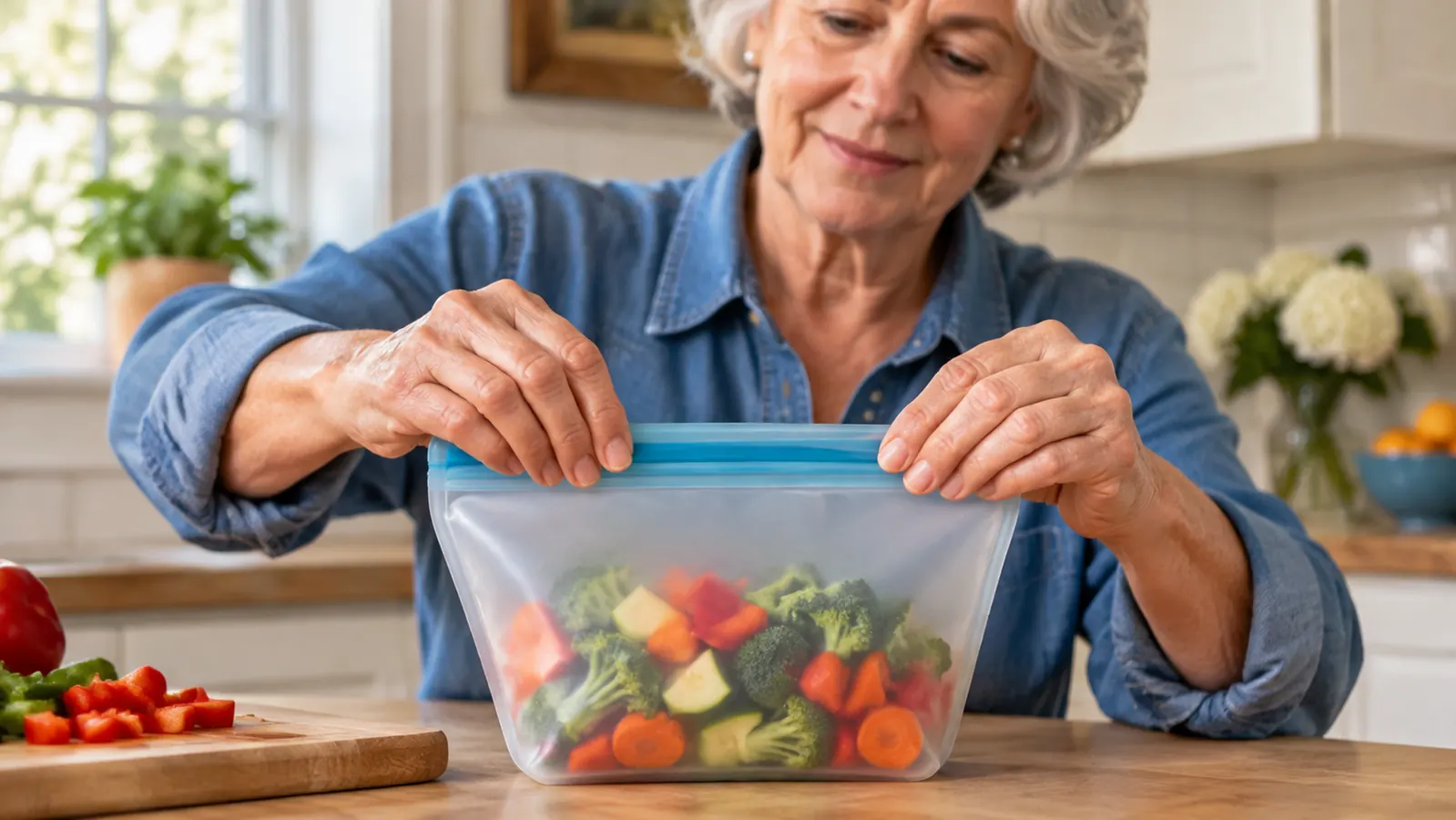
Here is the thing I did not expect. The closure is a self-seal channel. You press the top together along a groove and it holds, and the listing calls it airtight and leak resistant, and my experience backs that up. I put a sandwich bag of sliced tomatoes in my tote bag sideways and drove twenty minutes to Fort Collins, and nothing came out. That is a real test and it passed.
But it is not a zipper, and this is where people get annoyed. You cannot feel it click the way you feel a plastic zipper click. There is no click. You press it shut and you have to trust it, or you run your thumb along the channel from one corner to the other to check. I have had exactly two failures in a year. The first was a sandwich bag of sliced peaches in Caleb's lunchbox in June, which he reported to me with great seriousness. The second was a bag of pesto in September that came open in the freezer. Both times I had pressed the middle and left the corners.
Once you learn to run the whole length corner to corner, the failures stop. It took me about three weeks to build the habit, and now my thumb does it without my thinking about it, the way you check a pocket for keys on the way out the door.
The other thing nobody says out loud is that if you overfill it, it will not seal at all. Silicone is grippy and the channel has to meet itself. A bag stuffed past the fill point simply stays open, and you will not notice until it is in your bag or already lying flat in the freezer. Fill it to about three quarters and it behaves. This is the most common way I have seen people get a leak and blame the bag for it.
I have had exactly two failures in a year. Both times I had pressed the middle and left the corners.
The Staining Is Real and It Is Not Coming Out
Nobody warned me about this and I want to warn you. Silicone takes on color from what you put in it. My half gallon bag, after a summer of green beans and one large batch of tomato sauce in September, is no longer the shade it was when it came out of the box. It is not dirty. I have washed it in the dishwasher and by hand with hot water and soap, and it is clean. It is dyed, the way a plastic cutting board gets dyed.
I tried a baking soda paste. I let it sit on the bag for an hour and scrubbed it with a soft brush, and it made no difference at all. I tried lemon juice the following week. Nothing. The color is in the silicone, not on it.
This bothered me more than it should have. I am a person who likes things to look the way they looked when they were new. But the bag functions exactly as well as it did on day one, and I have made my peace with it, mostly by not looking at it too closely when I open the freezer.
If you are somebody who needs the kitchen to look tidy and uniform, buy the set and dedicate one bag to tomato products and one to everything else. I did not do that and I wish I had. It is not in any instructions I read, and it is the single piece of advice I would give someone opening the box for the first time.
The Freezer Is Where They Earn Their Keep
I garden three raised beds, tomatoes and zucchini and green beans, plus basil and parsley in pots on the back patio. The Colorado season is short and it ends all at once, and freezing is how I get through January without paying for beans that taste like nothing.
These bags have been excellent for that. The half gallon lies flat with beans in it and stacks in the drawer like a book. It does not crack in the cold the way rigid plastic does, and the beans at the corners have not taken on that flat freezer taste, at least not in the four or five months I have kept anything in one. I have reused the same bag for four separate freezing rounds and it shows no sign of giving up.
The routine, in case it helps. Pick the beans in the morning while it is still cool. Trim and snap them on the porch. Three minutes in boiling water, then straight into a bowl of ice water, then spread on a dish towel to dry for an hour. Dry matters, because water in the bag turns to ice and the beans clump into a block. Then into the Stasher half gallon, press it flat, push the air out with the heel of your hand as you seal it, and lay it in the drawer.
Herbs are the other win. Chopped basil frozen flat in a sandwich bag breaks apart when you need it. It is no good for a salad and perfect for sauce, which is the only thing I use basil for anyway. Pesto goes into an ice cube tray first and then the cubes go into the snack bag, and that is the one job that small bag has actually earned.
Zucchini I shred, salt, squeeze dry in a dish towel, and pack into the sandwich bags in two cup portions. Nine of those last summer. It made eleven loaves of zucchini bread between August and December, and Nora took two of them home to Fort Collins in her backpack.
The one caveat is that silicone is a poor barrier compared with a vacuum sealer. If you are putting up meat for eight months, this is not the tool, and I would not pretend otherwise. For beans and herbs and cubes of pesto that you will eat within a few months, it is entirely fine, and it is far less fuss than dragging the vacuum machine up from the basement.
The Drying Problem, Which Is the Real Complaint
I mentioned the dishwasher. They come out wet and they stay wet, because silicone does not shed water and the shape holds a puddle in the corners. If you stack them damp they get a smell. Not a rotting smell. A flat, closed-in smell that you notice when you open one, like the bag has been holding its breath.
The fix is to stand them open over a glass or a mug, or drape them over the divider in the dish rack overnight, or put them in a low oven. The bags are rated safe to 425 degrees, so two hundred for ten minutes will dry them out, and the microwave works too. But that is a step, and nobody tells you about the step before you buy.
I dry mine over the back of a kitchen chair for a day and then put them away. It looks ridiculous. It works. My daughter has commented on it twice and I have chosen not to defend myself.
That is the honest trade. A zip-top bag you throw away costs you nothing in labor. This costs you about ninety seconds of fiddling per wash, plus the counter space while they dry. Over a year that is a real chunk of your life. I still think it is worth it, but I want you to know what you are agreeing to before you agree to it rather than after.
One more small thing. They hold smells the way they hold color. A bag that had garlic in it will smell faintly of garlic a week later, and a bag that held herb butter will smell of that. It fades. It does not vanish. I keep one bag for onions and garlic and the rest for everything else, and then it stops mattering.
The Heat Ratings Are Genuinely Useful
I did not buy these for cooking and I have ended up using them that way. They are safe in the microwave, safe in the oven up to 425 degrees, and rated for sous vide, which I have not tried and probably never will. What I have done is thaw frozen green beans in the microwave directly in the bag, and they came out without any softening or off taste, which I had fully expected.
Nora and I made herb butter in a sandwich bag in July. Soft butter, chopped parsley and chives from the pot by the back door, a little salt, then seal it and squish it until it is uniform. That is the sort of thing that used to be a bowl, a spatula, and a plastic bag. It was one bag and one spoon, and the bag went in the dishwasher after.
The oven rating I have used exactly once, to dry a bag I did not want to leave on the chair overnight. It worked. I would not make a habit of it.
Who This Is For
If you cook from a garden, a farm share, or a warehouse club, and you are freezing or storing in volume, these pay for themselves in usefulness inside a season. The half gallon bag alone justified the set for me. If you pack lunches for kids or grandkids, the sandwich bags are the ones you will reach for daily, and mine have held up to a twelve-year-old's backpack and a baseball bag.
They are also a decent answer if someone in your family has started counting things in your drawers. Nora's count is down considerably. I have not replaced the zip-top bags entirely, but I buy them far less often, and that was the actual goal when I started.
Who Should Skip It
If you want a bag that seals with a satisfying click and looks new after a year, pass. The self-seal channel takes a little faith and the staining is going to happen. If you are putting up meat long term, buy a vacuum sealer instead and stop reading this.
If the idea of drying four bags by hand after every wash makes you tired just hearing about it, believe that feeling. It is accurate, and the ninety seconds is real. And if you are shopping for a single bag rather than a set, the 4-pack is not a great fit, because you will end up with a snack bag you do not need. A two-pack of the sizes you will actually use makes more sense.
The Stasher set is a good product with honest limitations. I use it every week. I would buy it again, and I would buy it differently, which is about the most useful thing I can tell you.
Four bags, one workhorse, and a year of school lunches. That is what you are buying.
If you have a garden surplus or a grandchild who needs a sandwich at noon, this set does the job and takes the dishwasher without complaint. Just plan on drying them, and plan on the staining.
Amazon See the Current Price on Amazon →