
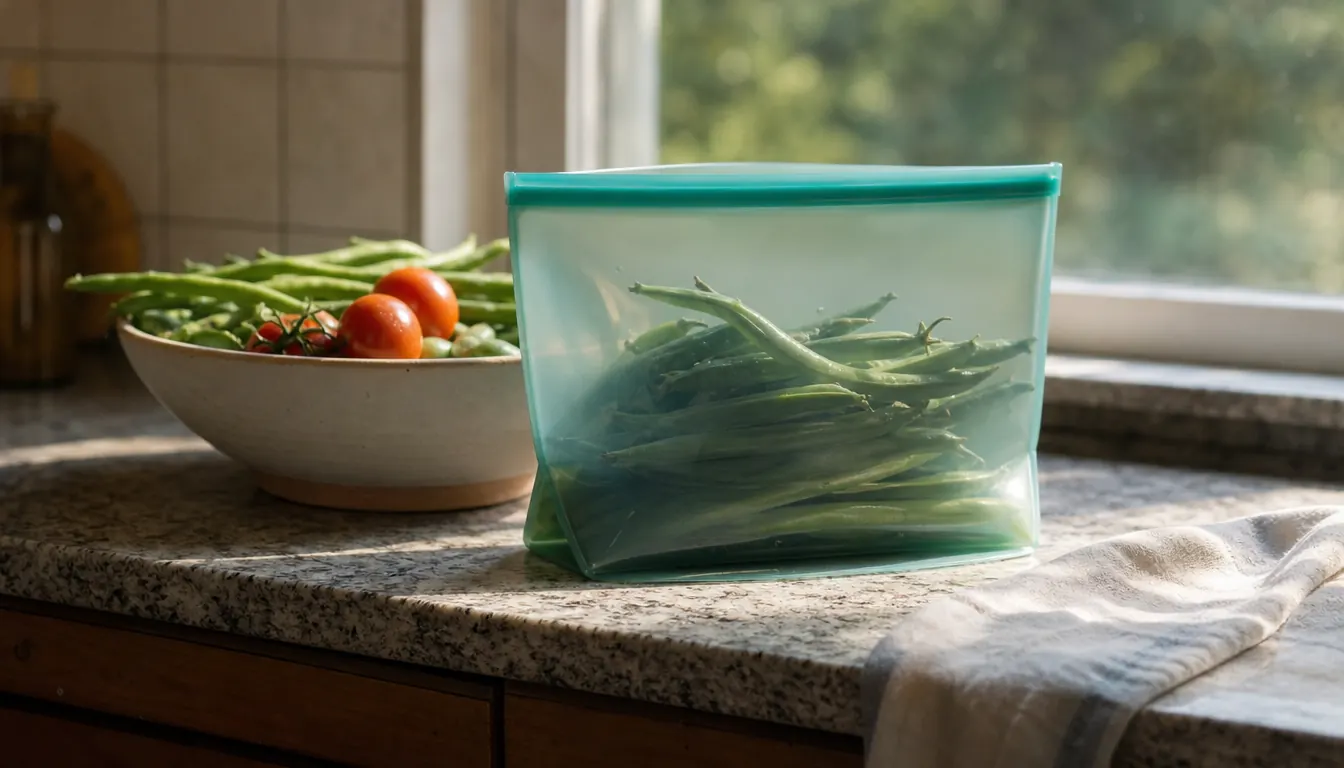
Nora counted forty-one zip-top bags in my kitchen drawer last April. She was fifteen, and she lined them up on the counter like she was taking inventory at a store. Some were washed and drying on a towel. Some had a heel of bread going stale inside. Three held nothing at all. I stood there with a dish towel in my hand and did not have a good answer for her, so the following week I bought a four pack of Stasher silicone bags and put them in the drawer where the plastic had been.
That was a little over one season ago. Since then those four bags have gone out to the raised beds with me, come back inside with herbs and zucchini, gone into the freezer with green beans in July, and gone to the table in packed lunches when Caleb and Nora stay the weekend. They have been through the dishwasher more times than I can count, through the microwave a dozen times, and into the oven twice. I am not an activist and I am not going to lecture anybody about the ocean. I am a retired school librarian in Loveland, Colorado, with three raised beds, a clay soil problem, and a short growing season. This is what actually held up.
The Quick Verdict
The four bags earned their place in the drawer and I would buy them again. The seal needs two hands and a full pass along the edge, and that single fact is the whole trade you are making.
Amazon Check Today's Price →The Four Bags That Ended the Counting in My Kitchen Drawer
One half gallon bag, two sandwich bags, one snack bag. Dishwasher, microwave, and oven safe to 425 degrees. Airtight and leak resistant, provided you press the seal the whole way.
Amazon Check Today's Price on Amazon →How I've Used Them
The bags live in the drawer that used to hold the plastic. They do not stack neatly. They slump into the space the way a soft pouch will, and I have stopped trying to file them in any orderly fashion. What matters is that the drawer no longer fills up with bags that get thrown away. I still keep one box of zip-top bags in the pantry because I am sixty-eight years old and old habits die slowly, but I use about one a month now instead of a dozen a week. Nora has stopped counting, which from her is high praise.
The sandwich bags do the lunch work. Caleb is twelve and eats like the baseball season depends on it, so his bag gets a sandwich cut in half, and the snack bag gets grapes or a handful of pretzels. Nora takes the snack bag with almonds and dried apricots because she does not trust the school cafeteria, which is a family trait. Both bags come home empty, get rinsed at the sink, and go into the dishwasher with the supper plates. That rinse is not optional if you want them to last, but it takes about eight seconds.
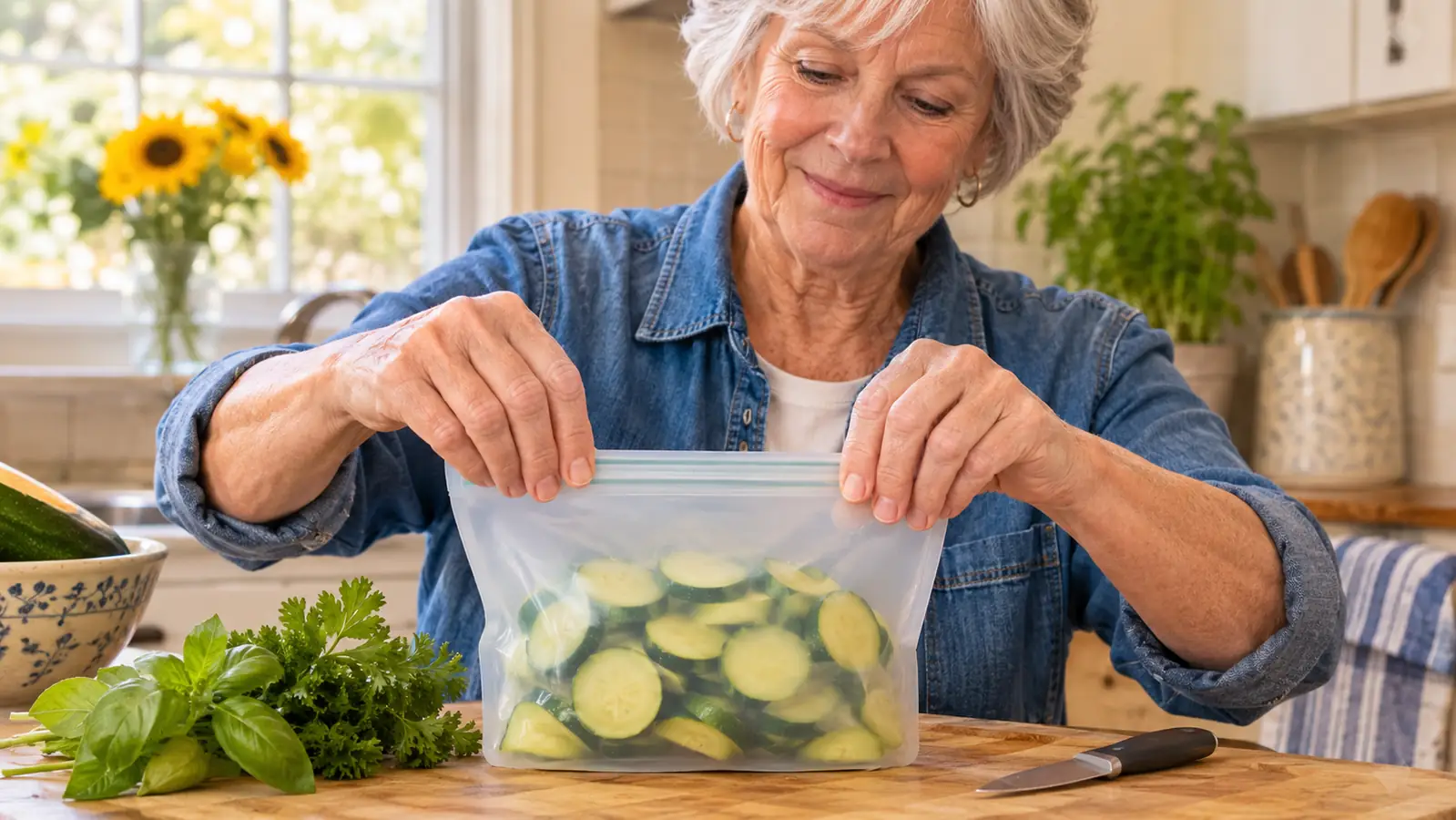
The garden work is where they earned their keep. Basil and parsley from the pots on the back patio go into a sandwich bag with a slightly damp paper towel and last four or five days in the refrigerator instead of wilting by Wednesday. Zucchini slices go into the half gallon bag in July, when three raised beds produce faster than one widow can eat. Green beans get blanched, cooled, and frozen, and I will come back to that, because the freezer was the test that mattered most and the one I expected them to fail.
There was a Tuesday in early August that sums the whole thing up. I picked two cups of green beans and a zucchini the size of my forearm before nine in the morning, because in Loveland you pick early or you pick wilted. I sliced the zucchini on the cutting board, filled a sandwich bag, pressed the seal, and set it in the refrigerator drawer. The beans went into the half gallon bag whole. By ten o'clock I had one bag of beans in the refrigerator, one bag of zucchini ready for Thursday, and an empty colander on the counter. No plastic, no trip to the store, no hunting for a rubber band in the junk drawer. That is not a dramatic story. It is the entire reason I kept reaching for them instead of the box in the pantry.
What the Four Bags Actually Hold
The listing is specific and the specifics are the useful part. The pack includes one half gallon bag at 64 fluid ounces, two sandwich bags at 28 fluid ounces each, and one snack bag at 12 fluid ounces. Each bag is rectangular, the listing puts the width at 7.5 inches, the whole four pack ships at 11 by 9 by 4 inches, and the item weight is 1.12 ounces. The listed capacity is 0.44 liters. That is worth reading twice before you order, because 12 fluid ounces sounds small on paper and turns out to be exactly one serving of most things.
In practice the half gallon bag holds a whole head of romaine broken down, or four cups of green beans with room to spare, or the better part of a bunch of kale. A sandwich bag holds a sandwich cut in half, or a cup and a half of cherry tomatoes off the patio, or a block of cheddar. The snack bag holds a handful of almonds, a few squares of dark chocolate, or the loose ends of a carrot. If you are packing lunch for a growing boy, the sandwich bags will be the ones you reach for, and you only get two of them. That is the one place this pack feels thin, and I noticed it in late July when everything in the garden came ripe at once and I had to choose between zucchini and green beans.
There is one more measurement that matters and the listing does not spell it out. The bags are about an inch deep according to the listed height, and that inch is the honest limit. A sandwich fits. A stack of four chicken breasts does not, or rather it fits but the seal strains against it. I tried that in June and the corners bulged, so I split the breasts between the two sandwich bags and quit trying to be clever. If you are storing something with real height to it, a container with walls is the better tool, and I should have known that from the start.
The bags are airtight and leak resistant according to the listing, and they close with a self seal. That means you press the two edges together and run your fingers along the entire length, corner to corner. There is no slider and no plastic track. That is the whole mechanism, and it is worth understanding before you buy, because half a seal is not a seal. I found that out the hard way with a bag of leftover soup in a lunch sack, and I will get to it.
How They Held Up Over a Season
The dishwasher has not hurt them. I put them on the top rack, propped open so the water can get inside, and they come out clean and dry with no warping and no white stress marks at the corners. The seal still grips the way it did in April. I checked it the way I check everything now, by filling the bag with water, sealing it, and holding it upside down over the sink for a slow count of ten. It held. That was in September, five months in, and it held again in November.
The heat tolerance is real and I have used it. The listing gives the oven at up to 425 degrees, and I have set the half gallon bag on a sheet pan with zucchini coins and olive oil at 400 for twenty minutes. It behaved. I have also reheated soup in a sandwich bag in the microwave, standing it in a cereal bowl in case of trouble, and the bowl stayed dry. I would not push past 425 and I would not put a sealed bag of anything liquid in the microwave without opening a corner first, because steam has to go somewhere.
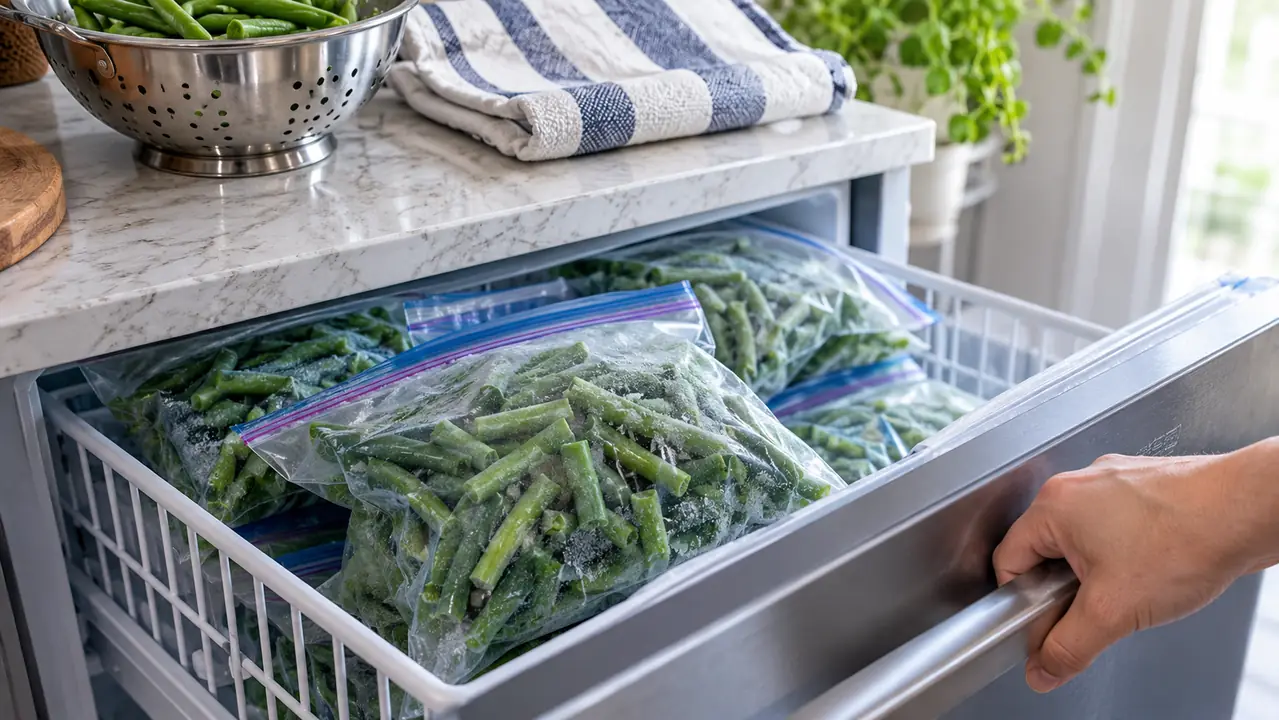
The freezer is where I expected disappointment and did not get it. In mid July I blanched a batch of green beans, cooled them in ice water, dried them on a towel, and loaded the half gallon bag. I pressed the seal along the whole edge, wrote the date on a strip of masking tape and stuck it to the outside, and put it in the drawer. I opened that bag in early November. No ice crystals inside, no freezer burn, no leathery edges on the beans. They went straight into a pot with a ham hock and tasted like July.
I labeled everything with masking tape and a fine point marker because I have lost track of what is in the bottom of that freezer before. The tape peels off clean and does not leave a sticky patch on the silicone, which surprised me. What the Stasher silicone does pick up is smell. A sandwich bag that held chopped onion for a stir fry still smelled faintly of onion after one wash. It took two dishwasher cycles and a day of sitting open on the dish rack in the afternoon sun to clear. The curry I froze in October did the same thing, though it faded faster. It is not a defect exactly, but if smells bother you, keep the onion bag as the onion bag and do not put a peach in it the next day.
The failures were mine, not the bags'. In June I filled a sandwich bag with leftover vegetable soup, pressed the seal halfway, and got distracted by the phone. It went into a lunch sack, tipped over on the drive to Fort Collins, and I found out when I picked the sack up. That is a two hand job and I did it with one. Since then I press the seal, then run my thumb along it a second time, and I have not had a repeat. If you are the kind of person who seals a bag in a hurry with one hand while holding a toddler, this will happen to you at least once.
What I Tried Before These
I have a shelf of glass containers with locking lids and I still use them for leftovers that go straight from the stove to the refrigerator. They are heavy, they take up cabinet space, and I will not send one to school in a twelve year old's lunch sack. Weight matters when you are sixty-eight and carrying a tote bag out to the raised beds with a trowel and a pair of shears in it. The silicone bags weigh almost nothing and they squash into a pocket of the tote when they are empty.
I also tried a quart mason jar in that tote bag for a season and stopped after it rolled off the passenger seat of the Outback and cracked on the driveway. The jar was fine for the pantry shelf. It was not fine for a bag that gets set down on a brick patio and knocked over by a garden hose. That is the pattern with all of this, and it is why the Stasher bags replaced the jar rather than sitting next to it. The right container depends on where it has to go, and half of what I carry goes outside.
The zip-top bags were the other option and I have already described how that went. They tear at the corner after two or three uses if you wash them. They do not go in the microwave without a fight. They do not go in the oven at all. And they accumulate, which is how Nora ended up counting forty-one of them in a drawer that could reasonably hold eight.
I considered cloth produce bags for the garden and I still think they are fine for potatoes and onions. They do not hold a cut sandwich, they do not go in the freezer without the beans drying out, and they will not survive a microwave. The four pack does all three jobs, which is why it ended up being the thing that stayed.
What I Liked
- Replaced nearly all of the zip-top bags in one kitchen drawer within a month
- Dishwasher, microwave, and oven safe to 425 degrees, and the top rack has not warped them in a season of use
- The half gallon bag froze four cups of blanched green beans from July to November with no freezer burn
- Airtight and leak resistant when the self seal is pressed the full length of the edge
- Nearly weightless in a tote bag, which matters more every year
Where It Falls Short
- The seal takes two hands and a deliberate second pass; one handed sealing leaked soup in my lunch sack
- They slump when empty and will not stand on their own, so they do not stack in a drawer
- Only two sandwich bags in the pack, and those are the ones that get used hardest
- They pick up the smell of onion and curry and hold it for a wash or two
- Four bags is not enough for a big harvest week, and I ran out in late July
I opened the half gallon bag in November, four months after a July blanching, and the green beans still snapped. No ice crystals. No freezer burn. That is the test I did not expect them to pass.
Who These Are For
These are for the person who packs lunches and is tired of buying boxes of bags that go in the trash by Friday. They are for a gardener with a short season who needs to get a July harvest into the freezer without spending an afternoon at the store. They are for anyone who has ever stood at an open drawer, looked at a pile of half used plastic, and felt tired. The Stasher bags are unglamorous and they work. If you have a grandchild who counts things, they will also earn you some peace.
Who Should Skip Them
If you seal bags one handed while doing three other things, skip these or buy them knowing you will leak something once. If you want containers that stand up on a shelf and stack in a neat column, buy glass or rigid plastic instead. If you are feeding a family of five through a big harvest, one four pack will not carry it and you should plan on two. And if you are looking for something that holds a whole roast or a thirteen by nine pan of lasagna, this is the wrong shape and the wrong size. I like them, but I like them for what they are, and they are lunch bags and garden bags, not casserole dishes.
The Drawer Nora Counted, One Season Later
One plastic bag a month instead of a dozen a week. The same four bags from April, still sealing, still going in the dishwasher. If that sounds like a fair trade, this is the pack I bought.
Amazon Check Today's Price on Amazon →