
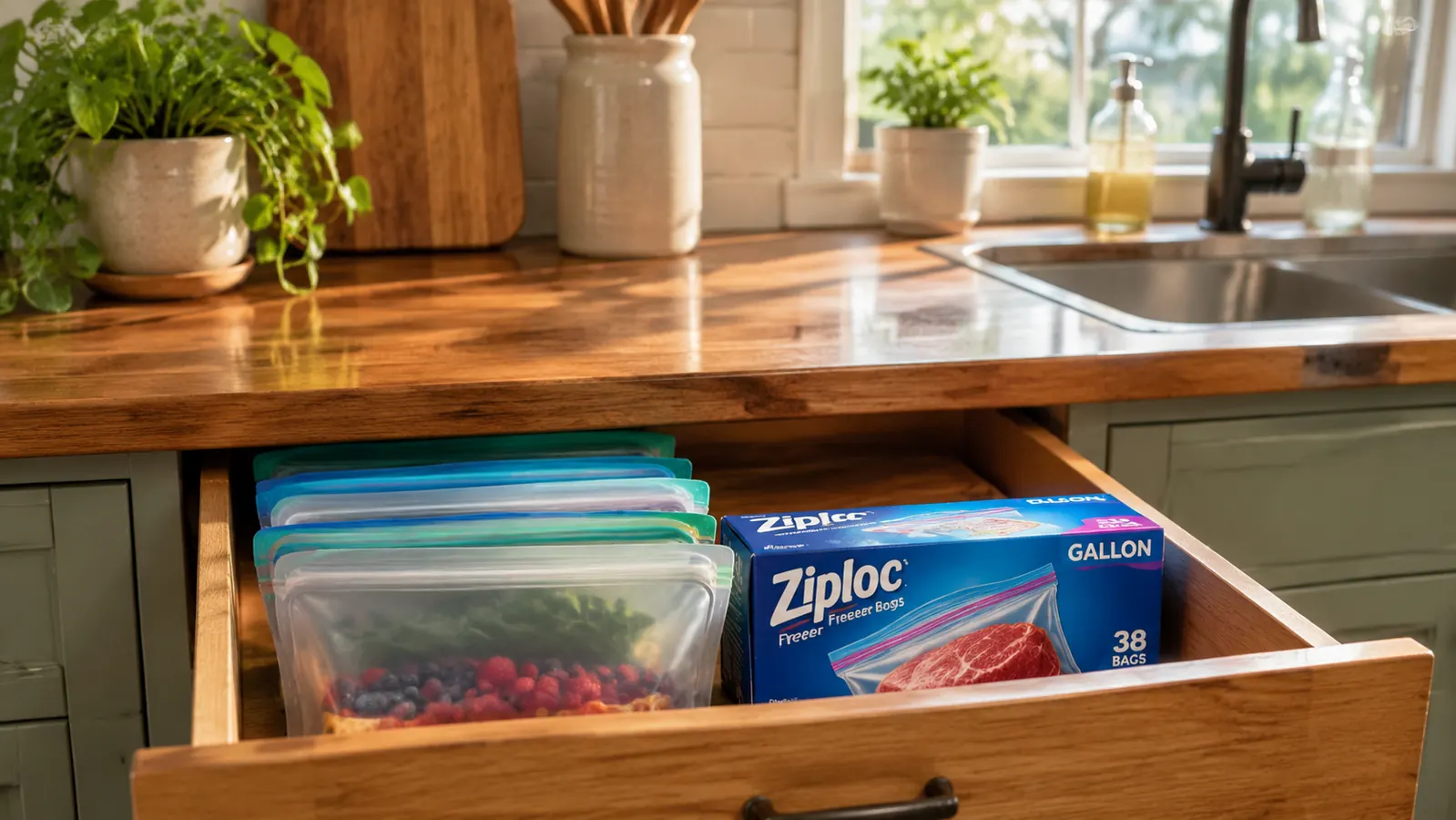
Nora counted the zip-top bags in my kitchen drawer. She is fifteen, she was home for the weekend, and she lined them up on the counter in rows the way she does with anything she plans to have an opinion about. Forty-one. Some were clean and drying, a few had a smear of something from last summer, and one had a zipper gone soft from being reused so many times I had lost track of when I bought it. She did not say a word. She did not have to.
That count is why I bought a 4-pack of Stasher reusable silicone bags last spring. I have used them for a full season now: Caleb's packed lunches, cut carrots and celery, basil and parsley out of the patio pots, and a good eleven pounds of green beans from the two rows out back that overproduce every August. I still keep a box of disposable zipper bags in the pantry. I am not going to pretend otherwise, and I do not think you should throw yours out either. So which is worth it? Short answer: the Stasher bags are worth it for most of what happens in my kitchen, the zipper bags are still better for two or three specific jobs, and a sensible drawer has both.
Here is the comparison, row by row, from a season of use in one split-level house in Loveland with one cook, two visiting grandkids, and a garden that does not know when to stop.
| Stasher silicone bags | Disposable zipper bags | |
|---|---|---|
| Cost to start | The 4-pack is a real purchase. You feel it once, in the first week. | A box is cheap and you never think about it again. |
| Cost across a year | I have not bought a box since April. | You buy one every few weeks, for as long as you keep cooking. |
| Seal | Self seal pinch closure, airtight and leak resistant | A zipper that works well until the tracks get gritty |
| Freezer burn | Beans packed in August still tasted right in February | Ice crystals by January, soft spots by March |
| Heat | Dishwasher, microwave, and oven safe up to 425 degrees | Not built for heat of any kind |
| Raw meat and marinade | You wash it, and you wash it properly | Seal it, toss it, done |
| Capacity per bag | The biggest bag in the pack holds 64 fluid ounces | A gallon bag holds more and lies flat in the freezer |
| Filling one handed | Floppy until it has something in it | Roll the top down and it stands open |
| Room in the drawer | Four bags need a real corner of a drawer | A flat box slides in anywhere |
| How long it lasts | A season in, no splits, no tears at the corners, no smell | One use |
| Where it ends up | Back in the drawer | In the trash |
What the table cannot show is how often I actually reach for each one. The half gallon Stasher comes out about four times a week. A zipper bag comes out maybe twice, both times for meat. That ratio is the truer answer than any single row, and it is the reason I would buy the set again.
Where Stasher Wins
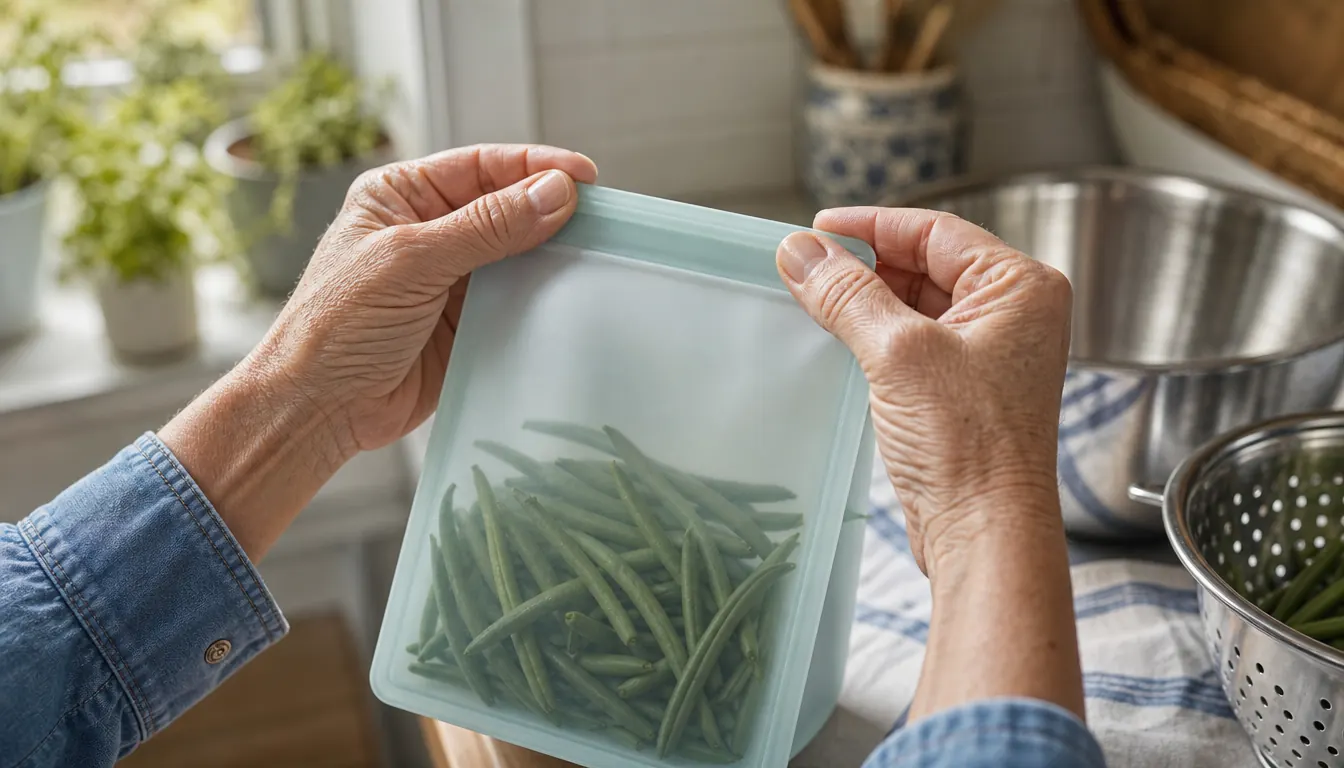
The freezer is where the Stasher bags earned their place. I blanch green beans in August, spread them on a towel to dry, and pack them into the half gallon bag, which holds 64 fluid ounces and takes a whole picking without an argument. Press the seal flat and it stays flat, and the bag is airtight and leak resistant, which is the part that matters at ten below. In February I opened a bag I had packed in August and the beans still snapped when I bent them. With the zipper bags I used to find ice crystals by January and two or three beans at the bottom gone soft and brown. I ate those anyway. I would rather not.
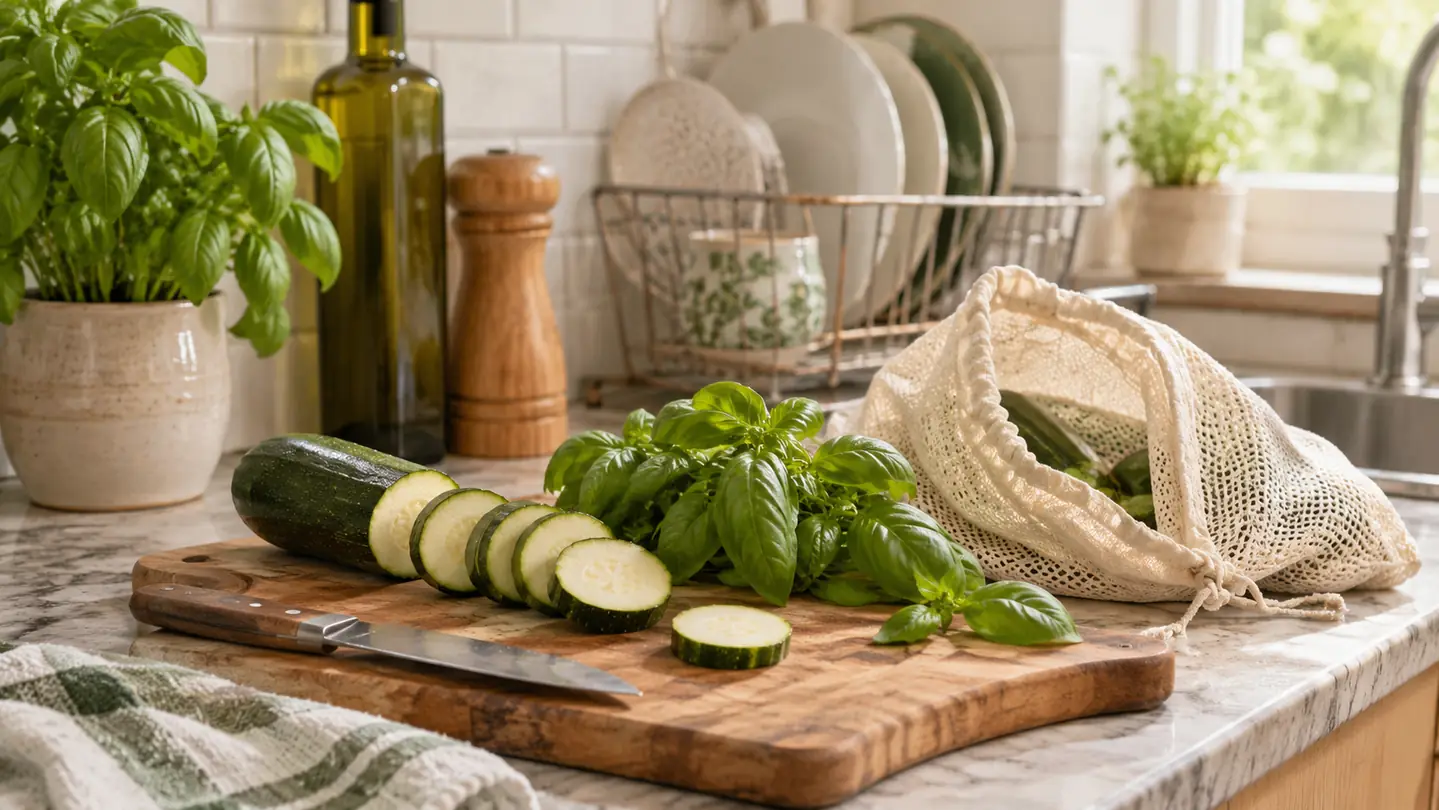
Herbs are the second thing. A sandwich bag of basil in the fridge door lasts about four days before it goes black at the edges. In the Stasher sandwich bag, with as much air pressed out as I can manage, the same basil goes closer to two weeks. Same story with parsley, and with the dill that comes up volunteer by the back step. The other trick the silicone bags have is heat. The listing says dishwasher, microwave, and oven safe up to 425 degrees, and I have tested two of those three. Reheating half a cup of rice in the microwave takes ninety seconds and the bag does not complain. Washing is a rinse under hot water, then the top rack of the dishwasher on Sunday night with everything else. Four bags have held up a season with no splits, no tears at the corners, and no smell that survived the dishwasher. Stasher says one bag replaces 260 single use bags a year. That is their number, not mine. What I can tell you is that I have not bought a box of zipper bags since April and there is still half of one in the pantry.
There is one more job I did not expect the set to take over. The snack bag holds 12 fluid ounces, about a cup and a half, and that is close to the number of cherry tomatoes that come off the two patio pots in one picking in late July. Those used to go into a cereal bowl with a plate set on top, which works right up until somebody moves the plate. In the snack bag they sit in the fridge door and are still firm a week later, which the bowl never managed. Same bag for the last of the grated zucchini before it goes into a loaf on a Sunday, and for the half onion I used to wrap in foil and then find in the vegetable drawer three weeks later, still wrapped, still a half onion.
The half gallon bag of green beans I packed in August still tasted like green beans in February. That is the whole argument, and it is a good one.
Where Disposable Zipper Bags Win
Raw meat is the honest one. I buy a whole chicken, cut it up on the board, and put the pieces straight into a zipper bag. Seal it, freeze it, and when the bag is empty it goes in the trash and I never think about it again. Washing a silicone bag that held raw chicken is a job. It takes hot water, soap, a thorough rinse, and a certain amount of faith, and I would rather spend that effort somewhere else. If you cook a lot of meat, keep the zipper bags and do not feel bad about it.
Capacity is the other plain fact. The biggest bag in the 4-pack is the half gallon. A gallon zipper bag holds more, lies flat in the freezer, and will take a cut up chicken or a batch of marinara without a discussion. Two smaller things, too. A zipper bag stands open if you roll the top down, so you can fill it with one hand while the other hand holds the spoon. The silicone bags are floppy until they have something in them, and the first few ounces of a sandwich bag take two hands and a little patience. Four of them also need a real corner of a drawer, where a flat box slides in anywhere. And there is the lending problem. When I send leftovers home to Fort Collins with Nora, or Caleb takes a snack to the ball field, the container does not always come back. With a zipper bag I do not care. With a good silicone bag I care a great deal, and after losing one to his equipment bag I started sending those trips out in the disposable kind.
Last August I made marinara with twenty two pounds of tomatoes off the three raised beds plus a bag a neighbor brought over because her own counter had run out of room. A gallon zipper bag took a whole batch, lay flat on a cookie sheet in the freezer, and by morning was a brick I could file upright like a book. Nine of them stood in the corner of the freezer without taking a shelf from anything else. There is no version of that afternoon with the silicone bags. The half gallon holds 64 fluid ounces, which is half of what the gallon bag holds, and two of them in the same corner do not lie as flat or stack as neatly. For putting up a season of sauce in one go, the disposable bag is simply the better tool, and I will be buying a box again in August.
How the Four Bags Break Down
The 4-pack gives you one half gallon, two sandwich, and one snack bag, and after a season I would not change the mix. The half gallon is the workhorse: green beans, a head of lettuce, the last of the zucchini when the counter is already full and the neighbors have started locking their cars. The two sandwich bags alternate between Caleb's lunch and fridge storage for cut vegetables. The snack bag, at 12 fluid ounces, is for herbs, a handful of cherry tomatoes, or the almonds I keep telling myself I will eat instead of crackers.
A Tuesday in September, for the record. Both sandwich bags went out the door at seven with Caleb's lunch, one holding a sandwich and one holding grapes, and both came home empty and were in the dishwasher by eight that night. The half gallon had four cups of green beans in it from the Sunday picking. The snack bag had dill in it, cut that morning, because the dill by the back step had gone to flower and I was not going to waste it. That is a normal load, and it is the load the 4-pack is sized for. Somewhere around the middle of June I stopped thinking about which bag to use. Before that I was still reaching for a zipper bag out of pure habit, getting it as far as the counter, and then putting it back.
Washing happens twice a week, more in August. I rinse, turn them inside out over the faucet, and stand them open on the rack by the sink to dry overnight. They do not dry as fast as a glass container, and they take up rack space while they do it. That is the honest annoyance, and it is not a small one on a Sunday when the dishwasher has run and the rack is already full of pots.
What I Got Wrong at First
I started out using the half gallon for everything, which meant a lot of washing for a little bit of carrot. Once I sorted the sizes and stopped putting three green beans in the biggest bag, the whole set became easier to live with. I also put them on the bottom rack of the dishwasher the first week, because that is where the plates go. They flipped, filled with water, and came out with a puddle in every corner. Top rack since then, and no trouble at all.
I dried them folded flat on the counter that first month too, which is how you get a cloudy film on the inside. Standing them open fixed it. And I stopped sealing anything wet. The beans get ten minutes on a towel before they go in the bag, and the difference in how they freeze is not subtle. None of this is in any instruction sheet I read. It is just what a season taught me.
The other thing I got wrong was the order of operations on a washed bag. Rinse first, then wash, then rinse again, then stand it open. If you wash a bag that still has a film of tomato sauce down in one corner, you will find that corner again three days later and you will not be pleased about it. I also learned to check the seal before anything goes into the freezer. A pinch closure with a fleck of parsley caught in it will let air in, and air is what turns a February bean into a brown one. Run a thumb along the inside of the seal, press it shut, and look. It takes four seconds. I do it every time now, and I have not lost a bag of beans since.
Four bags that ended the forty-one bag drawer
One half gallon, two sandwich, one snack. Freezer safe, microwave safe, dishwasher safe, and still going after a season in a working kitchen. Keep a box of zipper bags for the raw chicken.
Amazon Check Today's Price on Amazon →Who Should Buy Which
Buy the Stasher set if you are where I was: a drawer full of half used zipper bags, a freezer with garden produce in it, and a grandchild who counts things. It suits one or two people who cook at home, freeze in small batches, and pack a lunch now and then. It suits anyone who reheats in the microwave and anyone tired of buying the same box over and over.
Stay with the zipper bags, or keep them alongside the way I do, if your kitchen runs on raw meat, bulk marinades, and containers that leave the house and may not come back. They are also the cheaper way to find out whether you will keep up with washing something. That is worth saying plainly. A silicone bag you resent washing is worse than a zipper bag you throw away.
Nora has already told me what she thinks. I told her she is right, which she enjoyed, and then I told her the bags still have to be washed. She is fifteen. She will learn, the way I did, that the point is not buying the right thing once. It is buying it and then living with it.
The set I will be packing green beans in again this August
Biggest bag holds 64 fluid ounces, the snack bag holds 12. Self seal closure, airtight and leak resistant, and one bag is meant to replace 260 single use bags a year.
Amazon Check Today's Price on Amazon →