
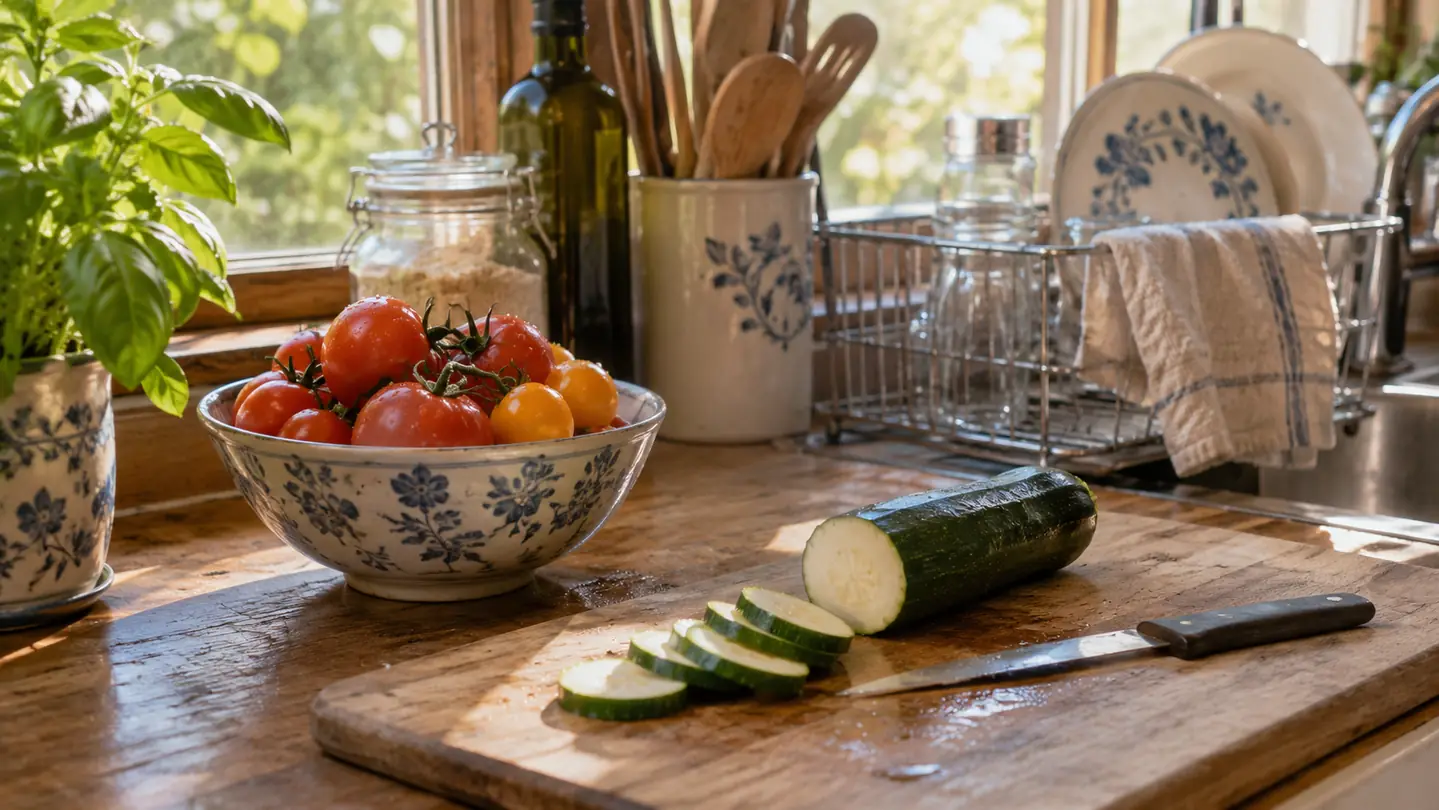
Nora counted the plastic film in my kitchen drawer last June. She is fifteen, she was home for a week of summer, and she had appointed herself the household auditor. Forty-one crumpled squares, most of them fused into a single wad, none of them doing anybody any good. Two weeks later the first zucchini came off the vine faster than I could eat it, and I drove to the store and bought a three-pack of Bee's Wrap. Partly to get her off my back. Partly because I was tired of fighting a roll of cling film that would not tear straight.
A year on, both of them still live in that drawer. That is the honest answer to the question in the title. Bee's Wrap did not replace plastic cling wrap in my kitchen, and I do not think it is built to. What it did was take over the two thirds of the work that cling film was never much good at, and the roll stayed for the jobs where nothing else will do. Below is how the two of them actually compare after a full season of tomatoes, one hailstorm, and a very sticky mistake with a warm loaf of bread.
| Bee's Wrap | Plastic Cling Wrap | |
|---|---|---|
| Material | Cotton coated in beeswax, organic plant oils, and natural tree resin | Thin plastic film on a roll |
| Fit | Three sizes, small through large, folded around the food itself | Cut to any length and pressed onto the container |
| Seal | Holds because the wax warms under your hands and sticks to itself | Sticks on contact to glass, ceramic, and metal |
| Breathability | Lets air move, so lettuce and herbs do not sweat | Sealed tight, no airflow at all |
| Reuse | Hand wash in cool water, air dry on the rack, repeat for months | One use, then into the bin |
| Hot food | Not the tool for a warm dish; the wax softens against heat | Takes leftovers straight from the pan |
| Raw meat and fish | Skip it; a cool hand wash is not enough to trust afterward | Fine for raw chicken, then straight into the trash |
| Washing up | Hand wash only, and three sheets fill the top of the dish rack overnight | Nothing to wash |
| End of life | Composts when the wax finally gives out | Landfill, and it will outlast the house |
Where Bee's Wrap Wins
The first thing Bee's Wrap does that plastic cannot is let food breathe. A cucumber sealed under cling film turns limp and slimy in about four days in my kitchen. Wrapped in the waxed cloth it keeps its snap most of a week, and the difference is airflow. The Bee's Wrap material is cotton coated in beeswax, organic plant oils, and tree resin, and it is not airtight by design. That sounds like a weakness until you watch a head of lettuce sweat inside a plastic bag and go to pieces by Thursday.
Herbs are where I noticed it most. I grow basil and parsley in pots on the back patio, since the clay soil out front fights me every year and I got tired of losing. Basil wrapped in Bee's Wrap held four or five days in the fridge door. Under film it went black at the edges by day two. Same plant, same week, two different wrappers. I have repeated that test more times than I meant to, mostly because basil is the one thing I refuse to buy at the store.
The second win is that it lasts. The three-pack has gone through a full summer of zucchini and tomatoes, a fall of apples, and a winter of cheese and bread. It gets hand washed in cool water, laid flat on the dish rack, and put back in the top drawer. When a sheet finally gives out, and one of mine is starting to, it goes into the compost pile behind the raised beds instead of the trash. I like that I am not buying the same object over and over. That is the whole argument, really, and it holds up better than I expected it to.
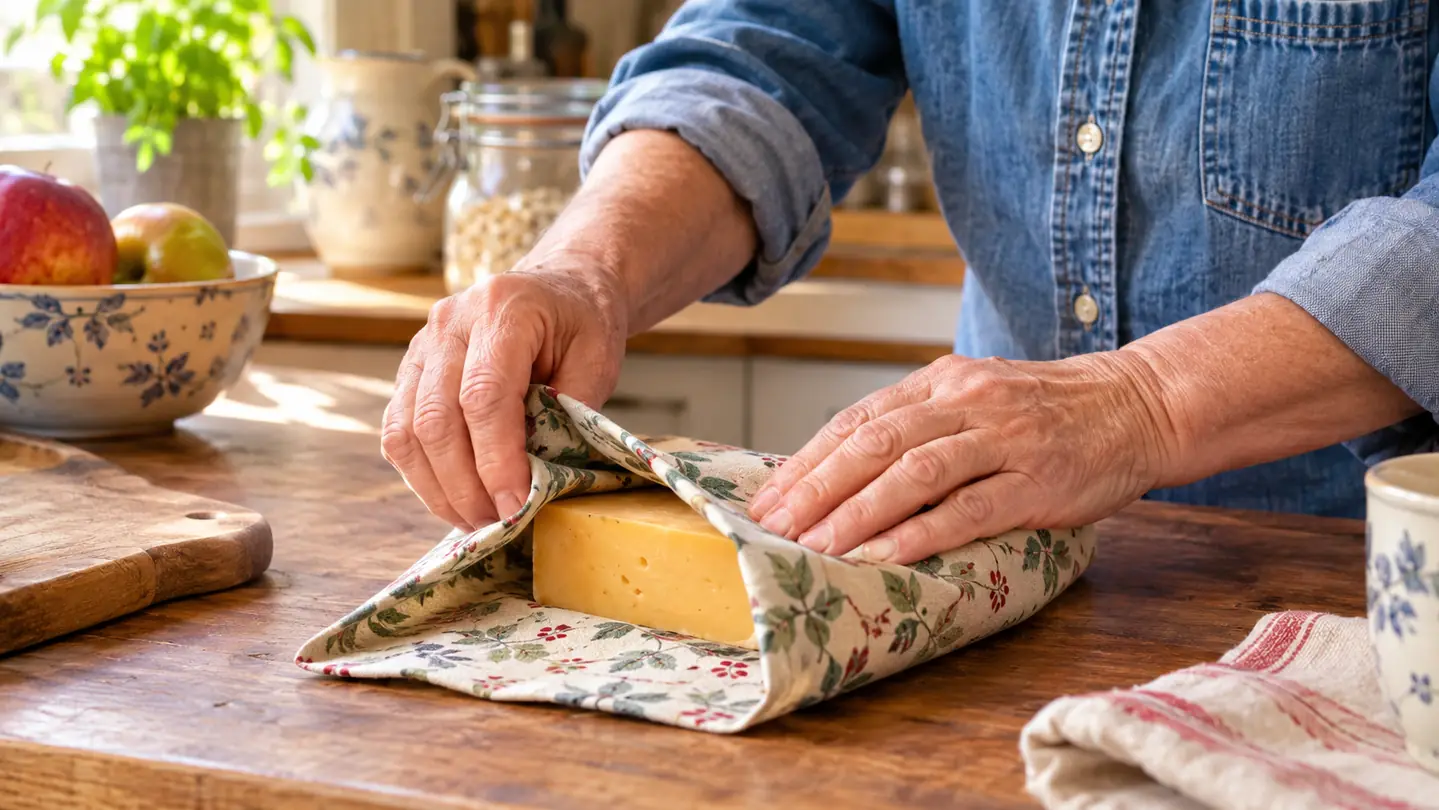
There is a smaller win that surprised me, and it is cheese. A block of cheddar wrapped in the cloth and left in the fridge door develops a rind rather than a slime, and it does not taste of the inside of a plastic bag. I do not know the chemistry of that and I am not going to pretend I do. I know a block lasted three weeks in July without going soft, which around here counts as an event. The large sheet does that work. It folds over the block and tucks under itself, and the wax grabs hold after a few seconds of warmth from my hands. The small one is for a cut lemon or the trimmed end of a cucumber. The medium one is the workhorse, and by August it is never in the drawer when I want it, because it is already out on the counter with something in it.
Where Plastic Cling Wrap Wins
Now the other side, because there is one and it is not small. Cling film seals. Press it over a bowl of leftover soup or a half onion and it sticks to the rim and stays there. Bee's Wrap holds by warming under your hands and clinging to itself, which works beautifully on a block of cheese and poorly on a wide mixing bowl. For anything with a lip wider than the sheet, the plastic wins without a contest, and no amount of enthusiasm changes that.
It also wins on the things you would rather not think about. I wrap raw chicken in cling film and throw the film away. I am not going to hand wash a waxed cloth that touched raw poultry in cool water and then feel good about putting an apple in it. Same story for a hot dish going into the fridge, or a bowl of warm rice. The wax softens with heat and there is no version of that which ends well. I proved it to myself once, by accident, back in October. I set a warm dish of green beans and onions on the counter and laid a sheet over the top because the roll was clear across the kitchen. Ten minutes later the wax had gone slack and sagged into the food. Nothing was ruined except my dignity, and I did not try it a second time.
And there is the plain convenience of a roll. A halved butternut squash is an awkward shape. So is a cut cabbage, or a plate of deviled eggs headed to a church supper. You tear off a length, stretch it, done, nothing to wash afterward. Some nights that matters more than a drawer full of cloth. I am not going to pretend otherwise, and neither should anybody who is trying to sell you the alternative.
The last point in its favor is tidiness, which sounds silly until you live it. A roll is one object. It does not need a dish rack, it does not need to dry, it does not need to be kept away from a warm stove. My Bee's Wrap sheets, when I have washed all three at once, take up most of the top rack and sit there overnight. That is a small thing until it is the fourth night in a row and every cup in the house is balanced on the counter.
For the jobs cling film was never good at, start with the three-pack
Small, medium, and large sheets in one pack. Hand wash in cool water, air dry on the rack, and put them back to work on cheese, bread, and half-cut vegetables. They compost when they are finished.
Amazon Check Today's Price on Amazon →The Cost Question, Without the Receipt
The roll is cheap and the wrap is not. That is the plain fact and pretending otherwise would be silly. But the roll is cheap every month, and the wrap was a one-time purchase I have now used for a year. I have not bought cling film since last July, and the roll in the drawer is the same roll. When I do the arithmetic in my head, the wraps came out ahead somewhere around the turn of the year, and they will keep coming out ahead for as long as the sheets hold together.
The catch is that you have to actually wash them. Three sheets, cool water, a little soap, laid flat to dry. If you are the sort of person who leaves a dishcloth in the sink until it smells, this is not your product, and I say that with affection because I have been that person for stretches of my life. The wrap only pays for itself if it stays in rotation, and rotation takes ten minutes a week. I do mine on Sunday evening while the supper dishes are draining anyway, so it costs me nothing but counter space. In the heat of August I wash them more often, sometimes every other day, because a cut zucchini weeps in the fridge and the cloth picks up the smell. Cool water and a drop of dish soap handle it. Hot water is the enemy here. It melts the coating and leaves you with a tacky sheet that never quite comes back.
How I've Used Them Side by Side
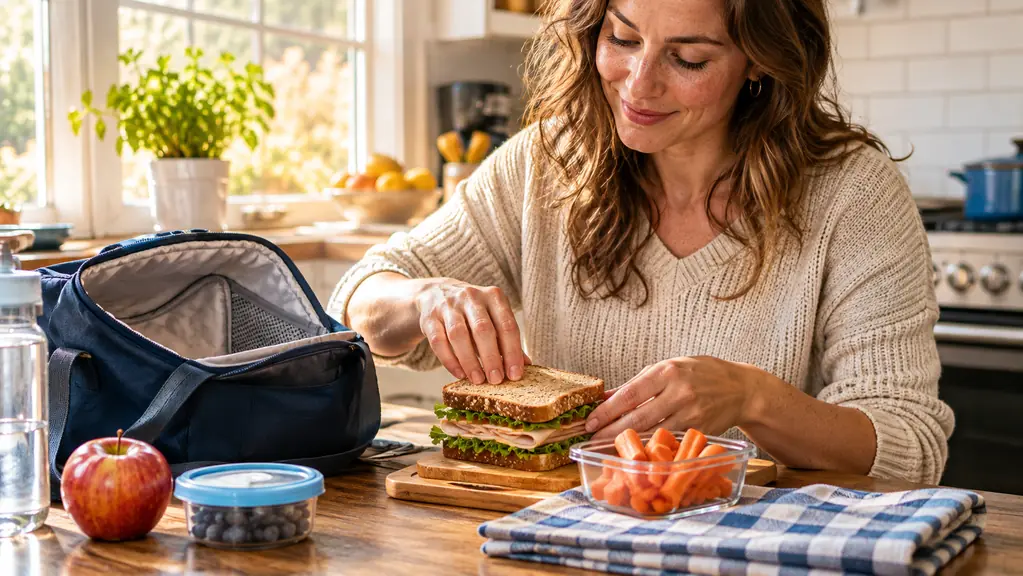
My kitchen has a routine now, and it is not complicated. Cheese, bread, half a lemon, a cut tomato, and anything going into a lunch bag get Bee's Wrap. Raw meat, a bowl with a lip, a plate headed to a neighbor's house, and anything still warm get the film. The three-pack lives folded in the top drawer next to the dish towels. The roll lives where it always did, by the sink, and it lasts me far longer than it used to, which is its own quiet victory.
I made one real mistake early on. I wrapped a loaf of bread that was still warm from the oven. The wax went tacky, stuck to the crust, and I spent ten minutes picking fibers off the bottom of a loaf I had been looking forward to all morning. That was not the wrap's fault, it was mine. Cool food, dry surface, and it behaves. I have wrapped bread at room temperature every week since and never had a repeat.
The other thing nobody mentions is that it changes what the grandkids do without a lecture. Caleb, who is twelve and eats like a boy who plays baseball should, now takes a sandwich to practice wrapped in cloth instead of a plastic bag. He has not lost one yet. Nora checks. She checks the drawer, she checks the compost bucket, and last spring she counted the zip-top bags too, which is how the silicone ones came into this house in the first place. Having a fifteen-year-old auditor is inconvenient and also effective.
The hail came in late June that first summer, which is normal here. It shredded the zucchini leaves and I assumed the season was finished. Two weeks later the vines recovered and buried me alive. By the end of that July I had four zucchini on the counter at once and nowhere to put them. I grated two and froze them in the silicone bags, wrapped the rest in cloth, and walked one across the street to the neighbor who always says she has plenty and always takes it anyway. That is how the three-pack stopped feeling like an experiment and started feeling like a sensible purchase.
Basil lasted five days in the cloth and two under film. That was not an argument about the planet. That was a Tuesday in my kitchen.
Who Should Buy Which
If you cook from a garden, or you buy produce in quantity, or you are the person in the house who packs the lunches, Bee's Wrap earns its spot. It is also for anyone tired of buying the same disposable thing every month. Three sheets, hand washed, will cover cheese, bread, sandwiches, and cut vegetables for a long stretch, and they compost when they are done. What it is not is a one-for-one replacement for the roll. Buy it expecting to throw your cling film out the same afternoon and you will be disappointed by Thursday.
Keep the plastic for raw meat, hot food, wide bowls, and the odd awkward shape you need sealed tight overnight. There is no shame in that, and an honest comparison will say so out loud. The mistake is treating this as a war between two products when it is really a question of which one belongs in which job. My drawer holds both. My trash can holds a good deal less than it did a year ago, and that was the point all along.
Three sheets, one drawer, and a lot fewer wadded-up squares
Small, medium, and large in a single pack. Cool water, air dry, back in the drawer. When a sheet finally wears out it goes into the compost instead of the bin.
Amazon Check Today's Price on Amazon →