
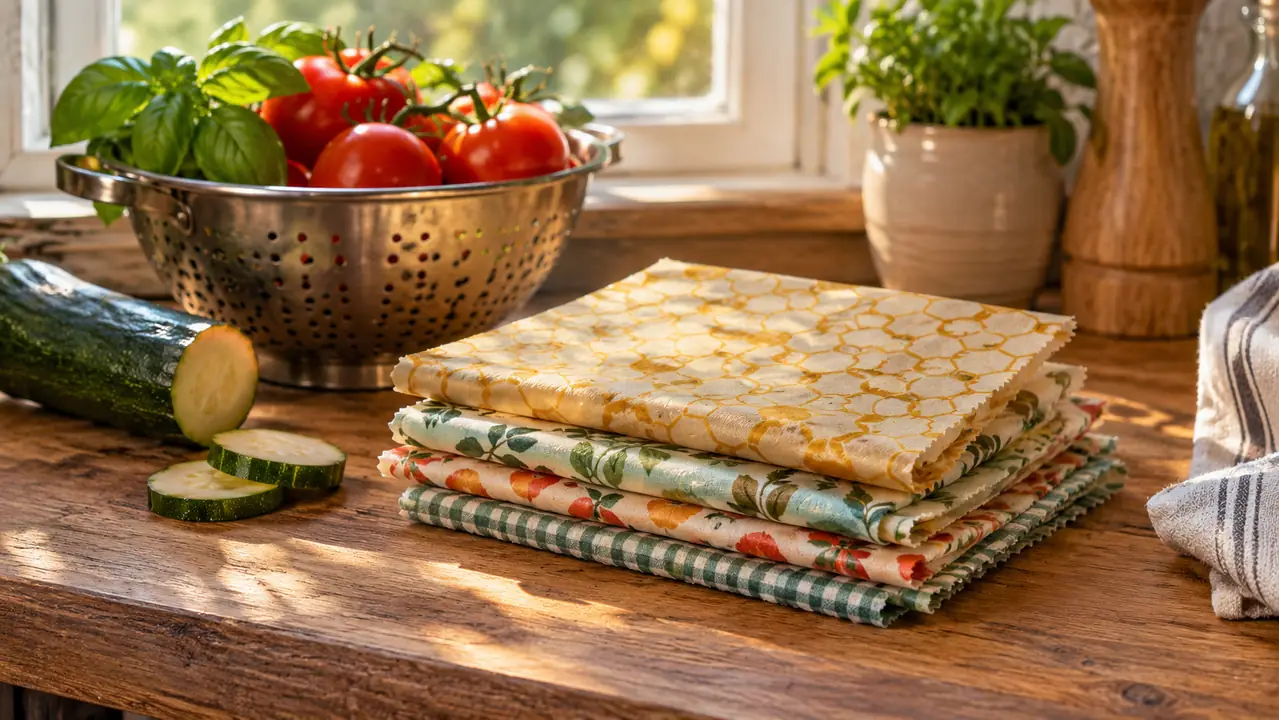
Bee's Wrap does what the package says it does. I am putting that at the top because the next several hundred words are complaints, and I do not want you to read them as a warning to stay away. I bought the three-pack last summer out of a specific kind of desperation. The zucchini were coming in faster than I could eat them, the tomatoes were splitting on the counter, and Nora had been after me for a month about the plastic wrap in my drawer. So I ordered it, and it has lived next to the sink ever since. It works. It is also more work than the thing it replaced, and the display at the store did not mention that part at all.
Here is the short version, before the details. If you want a cover that seals to a bowl with one press and never asks anything of you again, this is not that product and it never claimed to be. If you are willing to hold a piece against a warm bowl for ten or fifteen seconds and let your own hands soften the wax, it will do everything the box says. That trade is the entire review. Everything below is what that trade looks like on an ordinary Tuesday.
The Quick Verdict
Keeps cut produce and cheese noticeably longer than plastic, in exchange for fifteen seconds of hand work every single time.
Amazon Check Today's Price →One three-pack covers the half zucchini, the cheddar, and the loaf
Small, medium and large in a single box. That is the cut end of a zucchini, a block of cheese, and the bread, which is most of what I wrap in a week. Hand wash in cool water, air dry on the rack, back in the drawer.
Amazon See the three-pack on Amazon →How I've Used It, and What I Was Trying to Solve
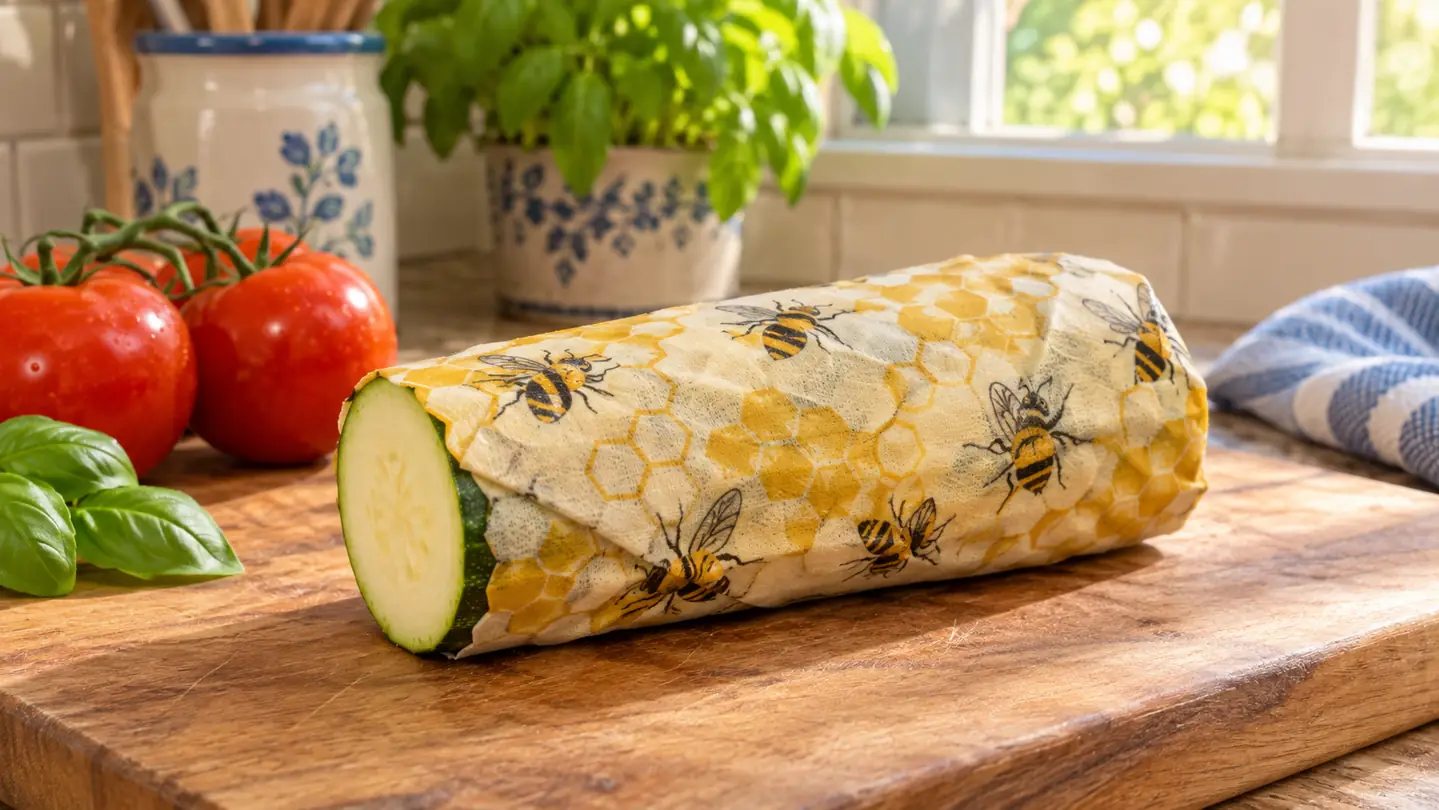
The first thing I wrapped was a half zucchini with the cut end exposed, because that was the emergency. The second was a block of sharp cheddar. The third was a loaf of bread I had baked badly and wanted to keep from getting worse. Since then the rotation has barely changed. Garden vegetables from June through September. Cheese all year. Bread when there is any. Now and then a bowl of leftover beans, which is where the large size earns its place in the drawer.
The sizes matter more than I expected them to. The small is roughly hand sized and I use it for the end of a cucumber or a tomato I have already cut. The medium handles cheese and sandwiches. The large is the one that goes over a bowl or around a head of lettuce. I worked the rotation out by trial, and getting it wrong costs you. A medium stretched around a mixing bowl leaves a gap at one side, air gets in, and the whole point of the exercise was keeping air out. For two weeks I was cutting a large down to fit a job the medium would have done properly, and I ruined the shape of it doing that. Now I keep one of each size within reach and I stop guessing. The package itself measures 7 by 8 inches and the three wraps fold down to almost nothing, which I genuinely appreciate. Plastic wrap comes in a box that occupies real drawer space forever. These do not.
Caleb is twelve and eats like the world is ending. His sandwiches go into a medium wrap now instead of a zip-top bag, and he has not complained once, which for a twelve year old is a standing ovation. Nora is fifteen and started this whole campaign in the first place. She opens the drawer when she visits to see whether I have relapsed. I have not. There is still one roll of plastic wrap in the pantry from before, and I keep it for raw chicken, which is not a job I intend to do with a wax wrap no matter what anyone on the internet says.
The material is cotton coated in beeswax, organic plant oils and tree resin, and the print is the bees and bears pattern. Nora approved of it, which is its own small victory. The cotton is what makes the whole thing work, because it breathes. That is the difference between this and a plastic bag, and it is not a marketing line. A cucumber in a sealed bag goes slimy. A cucumber in one of these goes soft slowly. I noticed the difference within the first two weeks and I have not stopped noticing it.
The Part Nobody Mentions: Your Hands Are the Adhesive
Beeswax wrap does not stick the way plastic clings. It sticks by warming. The wax softens at body temperature, and when you press the wrap around the rim of a bowl with your palms flat, it holds. When you try to do it in a hurry with two fingers, straight out of the cold tap, it slides off and you stand there feeling foolish. My first week was mostly the second thing. I want to be honest about that because the reviews I read before buying made it sound effortless and it is not effortless, it is learnable.
This is not a flaw in the design. It is how the material works, and it is the reason the wraps are reusable at all: the same wax that grabs a bowl when warm lets go when you peel it back. But it means the product asks for something at the exact moment you least want to give it, which is when dinner is nearly ready and you are trying to get things put away. The night it clicked was a Thursday in August. I had picked four zucchini that morning, roasted two of them, and was trying to clear the kitchen before the light went. I remember being irritated, pressing the wrap around the rim of a bowl with the flat of my hand, and then it simply held. Nothing clever about it. Warm palm, ten seconds, done. The difference between that and what I had been doing for two weeks was pressure across the whole surface instead of pinching at the edges with my fingertips. Nobody tells you that, because to anyone who has done it for a month it is not worth mentioning. I got faster. It took about two weeks. Now I do it without thinking, the way you learn the trick with a stubborn jar lid and stop resenting it.
One more thing about warmth, and this is the mistake I made most often. The wraps do not like a hot bowl. If I ladle soup or chili into a bowl and immediately try to cover it, the wrap goes limp, sags into the food and leaves a smear of wax on the rim. Let the bowl sit for a few minutes first. Same with anything straight out of the oven. I have not ruined a wrap permanently this way, but I have made one useless for the rest of the day, and that is annoying enough that I now keep a small stack of bowls cooling on the counter before I cover anything.
The half zucchini I wrapped in July was still firm enough to grate on day nine. The loaf of bread was stale in three. Same wrap, same kitchen, very different results.
What Actually Held Up, and What Did Not
Cut vegetables are where Bee's Wrap earns its keep, and it is not close. A zucchini halved and wrapped lasted the better part of a week in the fridge and was still usable when I got to it. Green beans from the raised beds kept for days without going rubbery. A bunch of parsley stayed upright and green far longer than it ever managed in a plastic sleeve, which surprised me given how fast herbs normally turn. The breathable cotton is doing real work there. Cheese held up well too, better than in a zip-top bag, and it did not sweat the way it does when it is sealed tight.
I tested it deliberately one week in the middle of August, because by then I had stopped paying attention and I wanted to know whether the difference was real. I wrapped half a zucchini on a Sunday night and put it in the door of the fridge, which is the coldest spot and the one where things usually go soft or freeze. On Wednesday it was fine. On Friday it was fine. I grated what was left on Saturday morning into a loaf and it did not taste tired. The same week I left an unwrapped half in a lidded container two shelves down and it was limp by Wednesday. That was the whole experiment and I did not need to run it again. If you want the honest version of why this works, it is airflow, not magic. The wrap breathes and the container does not.
Bread is the honest disappointment. It works, in the sense that the loaf does not go hard overnight, but the crust softens and loses the snap that made it worth baking. I tried the large wrap, I tried wrapping it while still slightly warm, I tried it cool. The crust always gives up. I have gone back to a paper bag inside a bread box for loaves and I use the wraps for cut ends only. If bread is the main reason you are buying these, adjust your expectations before you order.
Things that did not work at all: a cut avocado, which still browned no matter how tight I pressed the wrap against the exposed flesh. A bowl of hot chili, for the reason above. A whole cantaloupe, which was simply too big and too round for the wrap to grip. And anything on a rimless plate, because there is nothing for the wax to fold under and hold. That last one sounds obvious written down. It was not obvious to me at the time, and I stood in my kitchen at nine at night with a wrap drooping off a dinner plate like a wet leaf.
The Washing Question, Which Is Really the Whole Question
Every dish in my kitchen has a washing routine and this one is the fussiest. Cool water only. A little mild soap. My hands, not a sponge with a scratchy side. Rinse, shake, and drape over the dish rack to air dry, which takes longer than a plate does. Hot water melts the wax and it comes off in the sink, and once it is gone it does not come back. I made that mistake twice in the first month, both times with water I thought was merely warm.
The soap matters too, and I found that out the hard way. For the first month I used whatever squirt bottle was sitting by the sink, the same one I use on a greasy pan, and the wrap I washed that way most often went tacky at one corner inside of three weeks. It never got its grip back. The other two, washed the same way but less often, are still fine. Now every Bee's Wrap in the drawer gets the plainest soap in the house, a single drop of it, worked in with my hand rather than the sponge, and the two that started the same summer as the ruined one look and feel the way they did in June.
They are not dishwasher safe and they are not meant to be, which means these are not the item you reach for when you are tired and everything is going in the machine. Realistically I wash one or two a day, standing at the sink, and it takes about thirty seconds. That is the honest number. If thirty seconds a day sounds like too much, that is useful information to have before you buy rather than after.
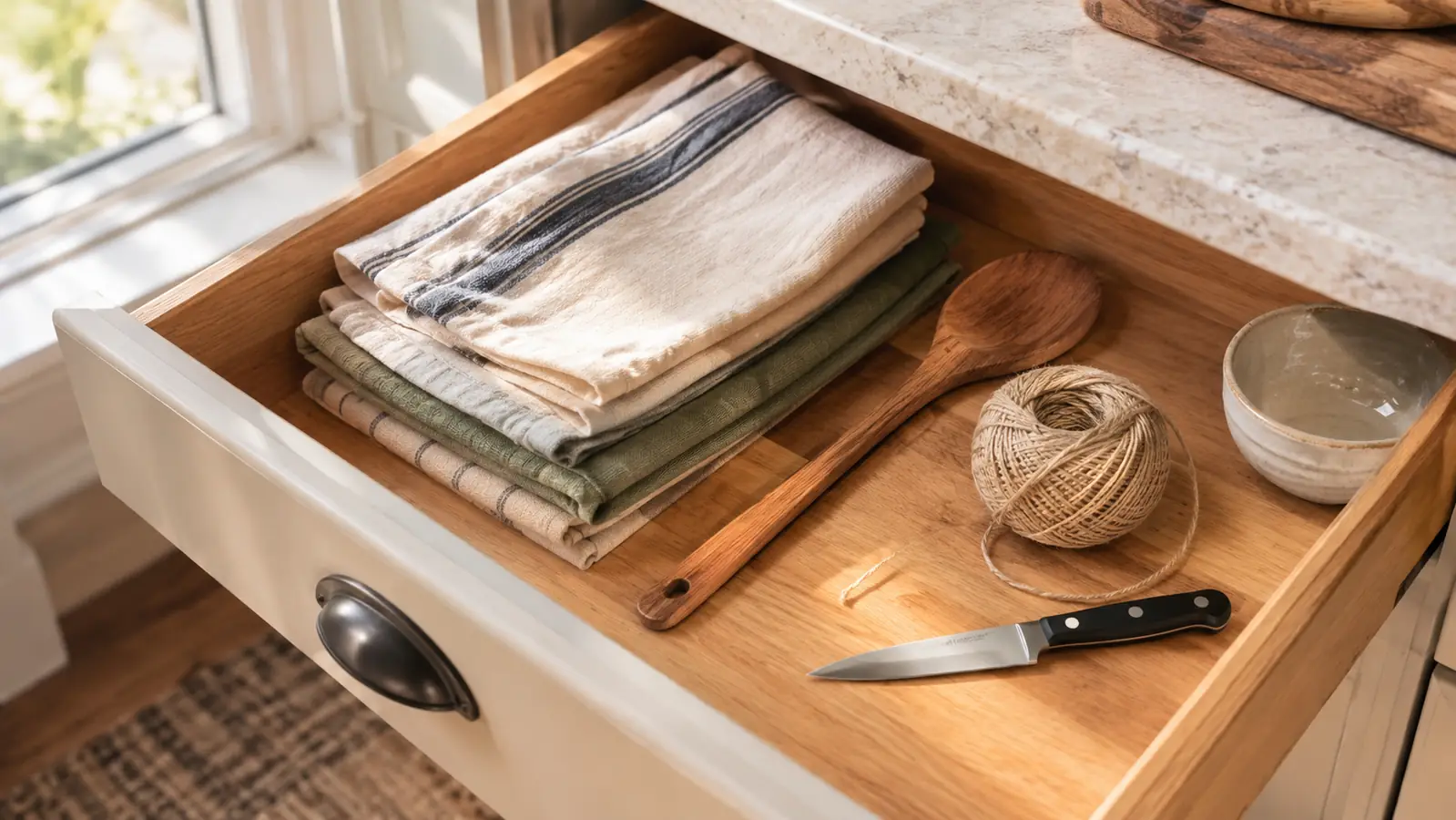
Storage matters more than you would think. Crumpled into a ball and shoved in a drawer, they crease and the creases get brittle. Laid flat and stacked, they last. Mine sit in a shallow drawer with the wooden spoons and they have held up fine for the better part of a year, with the edges of the most used one starting to look a little tired. The company says they can be composted when they are finished, and I believe it, though I have not retired one yet. I will put the first one in the pile behind the raised beds when it stops gripping, and see what happens.
What I Liked
- Cut vegetables and herbs last visibly longer than they do in plastic
- Breathable cotton means cheese does not sweat and greens do not go slimy
- Three sizes cover a cut end, a sandwich and a bowl without guesswork
- Folds flat and takes up almost no drawer space, unlike a box of plastic wrap
- Warms in your hands, so it grips a bowl rim without any adhesive
Where It Falls Short
- Needs fifteen seconds of hand pressure every time, which plastic wrap does not
- Hot water and hot food both damage the wax, so you have to think about temperature
- Bread crust softens inside it, so it is a poor fit for loaves
- Hand wash only in cool water, then air dry on the rack
- Will not grip a rimless plate or a very large round item
Who This Is For
This is for the person with a garden, or a farm share, or a habit of buying vegetables in quantities they cannot finish. If your crisper drawer regularly holds half a zucchini and three quarters of a cucumber, Bee's Wrap solves a problem you actually have. It is also for anyone who has already decided to cut back on single-use plastic and wants something that works rather than something that merely looks virtuous. It does work. It is not a decorative object that fails the first time you use it, which is more than I can say for some things I have bought in this category. And it is for people who are home enough to stand at a sink for thirty seconds, which is most retirees I know and plenty of people who are not retired at all.
Who Should Skip It
Skip it if you are buying it for bread, because the crust will disappoint you and you will blame the product for something it never promised. Skip it if you want to be able to throw everything into the dishwasher at the end of the night, because these cannot go in and hot water undoes them. Skip it if your household wraps a lot of raw meat, since that is a job for a bag you can throw away, not a cloth you have to wash by hand.
And skip it if the friction will make you stop using it. That is the real failure mode, and it is not a knock on the product so much as an honest warning. A drawer full of wraps you do not reach for is worse than a roll of plastic wrap, because you paid for the drawer full and you still have the plastic. I know people who bought these, liked the idea, used them for a month and quietly went back. The difference between them and me was not conviction. It was that I had three zucchini plants producing more than I could eat, and I had a reason to make the habit stick.
If the cut end of a vegetable is your daily problem, this is the fix
Three sizes, one box, hand wash in cool water and air dry. Nine months in my kitchen and the drawer is still where they live. Have a look at the current price before the summer produce arrives.
Amazon Check today's price on Amazon →