
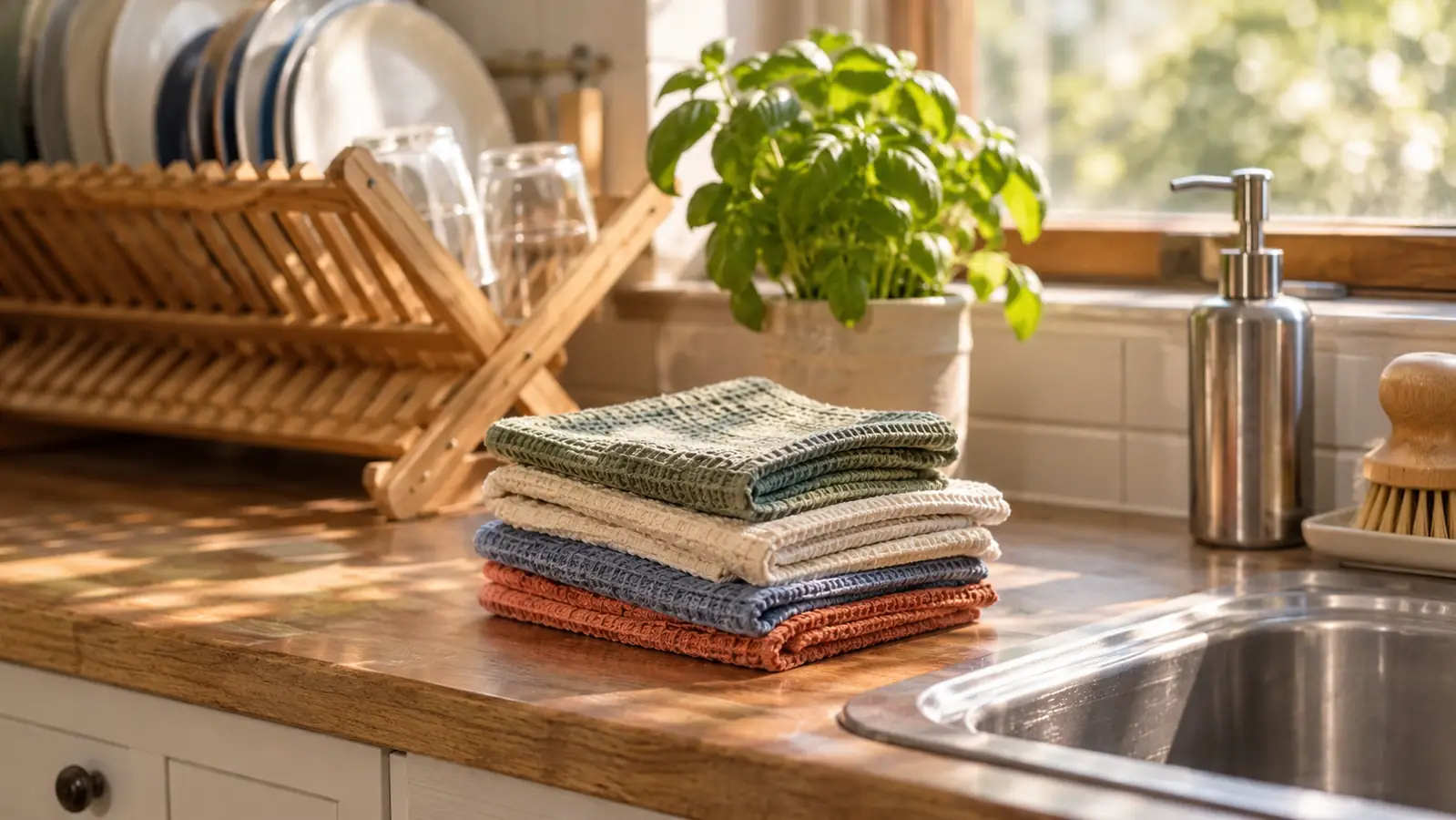
If you are standing in the paper goods aisle wondering whether a stack of reusable cloths can really replace the roll you have been buying since the Carter administration, here is the short answer. For counters, dishes, spills, sticky fingers and muddy garden tools, yes. For raw chicken juice and a pan of bacon grease, no. I have used Eulnars Swedish dishcloths and ordinary paper towels side by side in my kitchen in Loveland, Colorado, since last winter, and the split between them is that clean and that simple. What I did not expect was how quickly my hand would learn the difference. Six weeks in, I was reaching for the cloth without deciding to, and the roll sat on the counter getting dusty.
The set is eight cloths with clips, made from 70 percent cellulose wood pulp and 30 percent cotton, just under eight inches square, reversible, dishwasher safe and odor resistant. Paper towels are paper towels. What surprised me was not that the cloths work. It is how fast the roll in my kitchen stopped being the thing my hand reached for first. I kept track for a while, not scientifically, just pencil marks on the back of an envelope stuck to the side of the refrigerator, and the roll went from about one a week to one every three weeks. What follows is the honest comparison, including the jobs where I still keep paper on the shelf and expect to keep it there.
| Eulnars Swedish Dishcloths | Paper Towels | |
|---|---|---|
| Soaking up a spill | One cloth takes a full mug of coffee in a pass, gets wrung out, and keeps going | Fast on a small spill, but a big one takes three or four sheets and they are finished |
| Glass and stainless | Wipe, wring, wipe again. Comes up clear with no lint | Leaves a haze and lint unless you buff with a second dry sheet |
| Stuck-on food | The cloth surface scrubs dried egg off a plate without scratching the nonstick pan | Tears apart before the food gives |
| Raw meat and messes you want gone | You wash it, and you think about it afterward | Straight into the bin, no second thoughts |
| Bacon grease and draining fried food | The grease goes into the wash water and you hope for the best | Soaks it up and carries it out of the house |
| Restocking | Buy a set, use it for months | A fresh roll every week or two, forever |
| Storing it | Eight cloths stack flat in a drawer narrower than one roll | Rolls eat a whole shelf |
| Cleaning up after a muddy job | Rinse it under the tap and it comes back for the next pot | One wipe and it is done for |
| What it is made of | 70 percent cellulose wood pulp and 30 percent cotton, vegan, reversible | Paper pulp, usually bleached, single use by design |
| Best for | Counters, dishes, glass, spills, garden tools, grandchildren's sticky hands | Raw meat, hot grease, and anyone who does not want to think about laundry |
Where Eulnars Wins
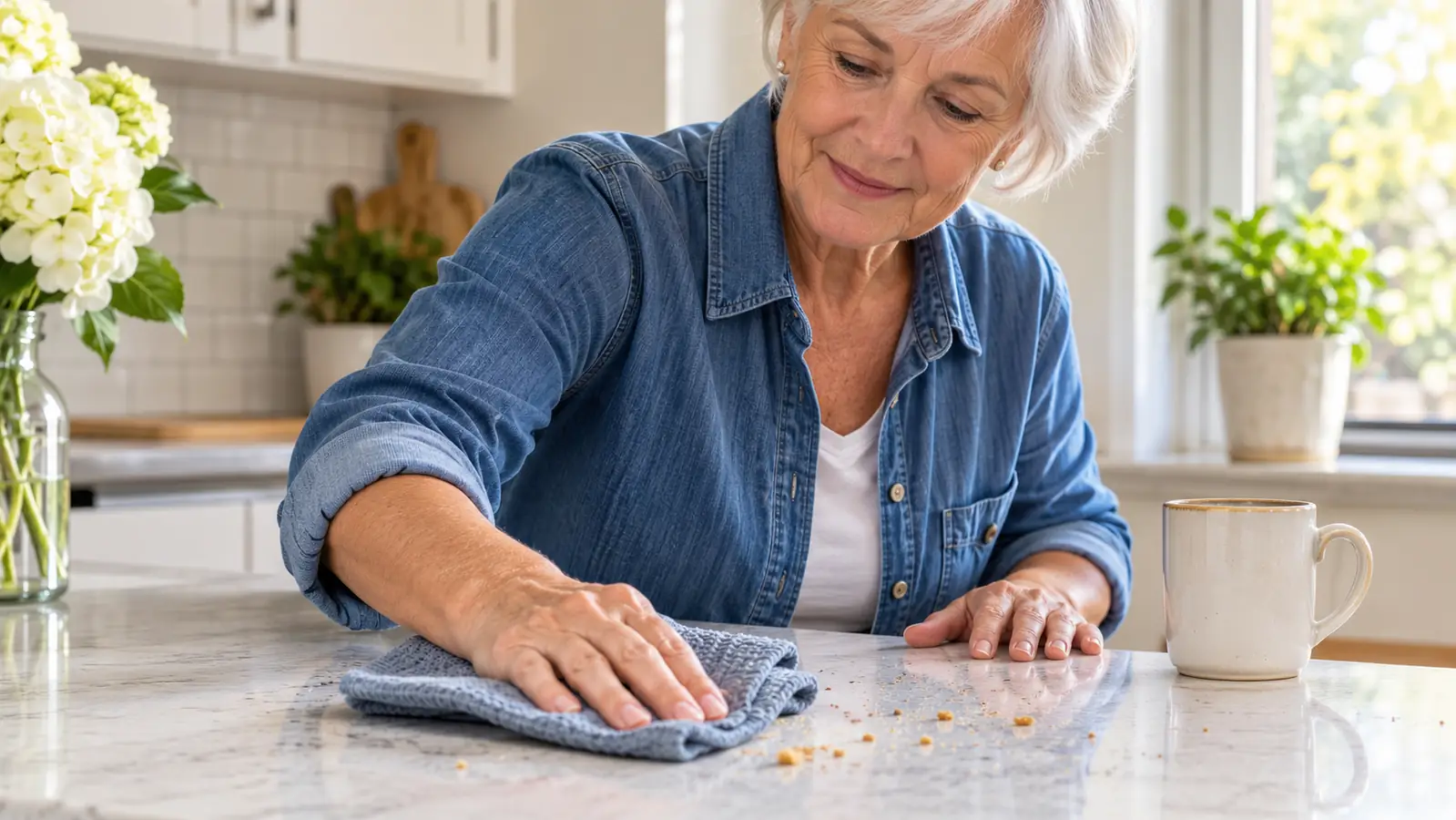
The absorbency is the part I did not expect. Cellulose and cotton hold a surprising amount of liquid for something that fits in one hand, so a spilled mug of coffee takes one pass and one wring instead of four sheets and a small amount of language. The first week I owned them I knocked a full mug of tea off the counter beside the sink, the kind of spill that used to take half a roll and a good deal of sighing. One cloth took it, I wrung it out over the basin, and the counter was dry. Glass comes up clear. So does the stainless kettle, the microwave door, and the front of the refrigerator where Caleb leaves fingerprints. Paper towels leave a haze on glass unless you go back over it with a dry sheet, and in thirty years of keeping house I have never once gone back over it with a dry sheet. The other thing I noticed is that a cloth does not shred at the corner when it hits a wet spot. It stays a cloth, which sounds like a low bar until you have pushed a soaking paper towel across a counter and watched it come apart under your hand.
Then there is the fact that it does not fall apart. I have scrubbed dried egg off a plate, wiped the rim of a zucchini pot, and taken a cloth to the nonstick skillet, and the surface came through all of it without scratching. The cloths go in the top rack of the dishwasher with the cups, come out ready, and do not hold onto the smell of the last thing I wiped. That last part matters more than the packaging suggests. A sponge that smells is a sponge you throw away. I had one three summers ago that turned sour inside a week, and I never did work out why, and I threw it out feeling vaguely accused. These have been in the drawer since last winter and the only cloth that ever picked up a smell was one I left balled up under the sink for four days by accident. Even that one came back after a run through the dishwasher with the dinner plates, and I have been less careless since.
Where Paper Towels Wins
Raw meat. I am 68 years old and I have handled chicken in my kitchen for most of those years, and I still want the thing that touched the cutting board to leave the house. A cloth will do the job and then it goes into the wash pile, and I think about it until it comes out of the dishwasher. Paper does the job and is gone. There is a version of this where I sound brave about it, and I am not going to pretend. The week I cut up a whole chicken for a Sunday dinner, I used paper for the board and the knife and the counter edge and did not think twice. If you are cooking in a house with a newborn, or with someone whose immune system is not what it was, that difference is worth keeping a roll for and not apologizing.
Grease is the other one. A pan of bacon, a plate of fried zucchini, the drippings from a Sunday roast: paper takes the grease and carries it out to the bin, while the cloth takes it into the wash water and does its best. I tried the cloth on bacon once, out of stubbornness, and it went into the dishwasher and came out fine and I still did not enjoy the interval. And there is a quieter argument. The cloths ask you to run a system. You need a clean one, a dirty one, a place for the dirty one, and the discipline to start the dishwasher before the pile turns. Paper asks nothing of you at eleven at night, when the last plate is done and your feet hurt. When my daughter and son-in-law cook here on a Friday, they reach for paper out of habit, and I have stopped correcting them. A guest should not have to learn your kitchen.
Eight cloths in one drawer, and the roll lasts a good deal longer
The Eulnars set is eight cloths with hanging clips, 70 percent cellulose and 30 percent cotton, non-scratch and dishwasher safe. Today's price and the pattern options are on the listing.
Amazon Check Today's Price on Amazon →What the Eight-Pack Actually Looks Like in a Week
Eight cloths arrive flat, with a clip for each. In practice three are in play at any one time. One lives by the sink for counters and hands. One handles dishes and glass. One sits under the sink and gets the floor, the garden pots and the step by the back door. When a cloth has done a session with raw meat, or starts to smell of zucchini, it goes into the top rack of the dishwasher with the cups and a clean one comes out of the drawer. The other five wait their turn. That rotation is the whole trick. A single cloth would have been in the wash pile by Tuesday and forgotten by Thursday, and I would have been back to paper by the weekend telling myself it did not work. I know this because I tried it with one cloth first, before I bought the set, and it lasted four days.
The size is right for the work. Just under eight inches square, small enough to wring out one-handed over the sink, large enough to cover a dinner plate in one go. They are reversible, so a cloth that has done the counter can be flipped and finished on the table. The patterns are geometric and they differ from one another, which sounds like a small thing until you have a floor cloth and a dish cloth in the same sink at the same time. I know which is which by the design, not by memory. Nora noticed that before I did, standing at the counter with a glass in one hand, and said it was the most sensible thing about the whole set.
The garden is where the difference showed up without my looking for it. I wipe the rims of the raised beds, the trowel, the shears, and the patio table after Caleb has had a slice of watermelon out there in July. A cloth comes back inside, gets rinsed under the tap, and goes out with me the next morning. The paper I used to carry out there got wet, shredded against the clay, and stayed in the yard in scraps I was still picking out of the beans in September. Somewhere in June I stopped putting a roll in the back of the Outback when I ran errands, and I did not miss it once. That was the moment I noticed the change had already happened without a decision.
The roll in my kitchen went from one a week to one every three weeks, and the only thing that changed was which cloth my hand found first.
The Habits That Decide It
Nora, my fifteen-year-old granddaughter, is the reason any of this is in my house. She counted the zip-top bags in my drawer two springs ago and has been the household's self-appointed recycling police ever since, and she is not gentle about it. She was the one who pushed me toward cloth over paper, and I agreed mostly to end the conversation on a Tuesday afternoon. I am not an activist. I garden because I like tomatoes that taste like tomatoes, and I keep things that last because a retired school librarian does not enjoy buying the same item forty times. That is the whole of my philosophy. It fits in a sentence, which is convenient at my age.
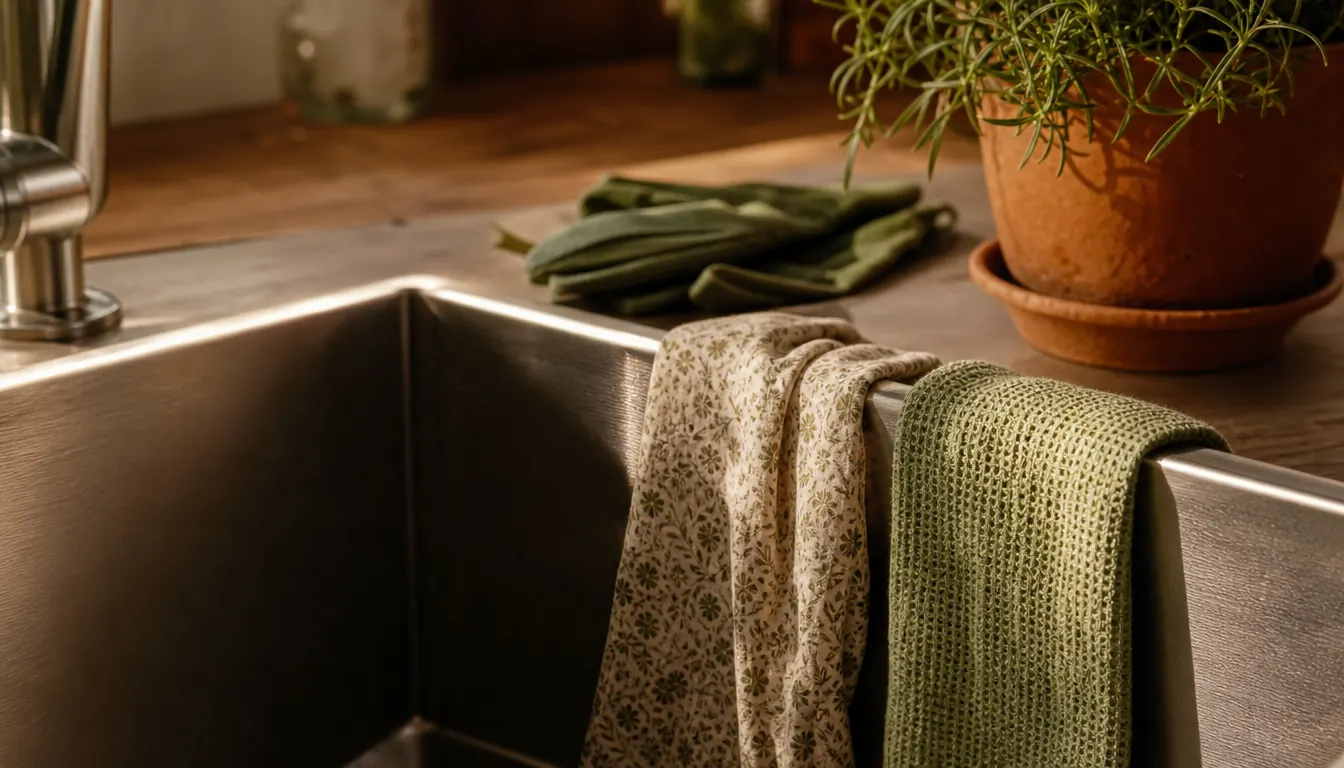
The practical habit that made it stick was small enough to be embarrassing. I clipped one to the cabinet knob by the sink and hung the day's cloth there to dry. A cloth in a drawer gets forgotten. A cloth hanging in front of your face gets used, and it dries instead of sitting damp in a heap. The second habit was putting the dirty ones straight into the top rack when I load the dinner dishes, instead of leaving them in a pile by the tap to deal with later. The pile is what smells. The rack is what works. Neither habit took more than a week to become automatic, and I am not a person who takes to new routines.
Caleb, who is twelve and eats as though the baseball season depends on it, has his own view of the matter. He likes that the cloth is already damp and ready when he comes in from the yard, and he likes that he does not have to ask where they are. I like that I am not hauling a case of paper towels in from the car every month, and that the drawer closes. Neither of us is thinking about the planet in that moment. We are thinking about a clean counter and a sandwich, which is how these things actually take hold in a house.
Who Should Buy Which
Buy the Eulnars set if your kitchen runs on wiping. Counters, dishes, glass, the high chair, the garden tools, the back door, the fingerprints on the refrigerator. If you already run a dishwasher most nights, the cloths slot into a load you were doing anyway, and the roll in your kitchen becomes a backup instead of the main event. Eight cloths is a generous number for one person living alone, as I do, and about right for a household of three or four who cook at home most nights. If you are on the fence, buy the set and keep your paper. Two systems in one kitchen is not a failure. It is how mine actually runs.
Stay with paper, or keep both, if your cooking leans on raw meat and hot grease, if someone in the house has a compromised immune system, or if you know in your heart that you will not start the dishwasher before the pile turns. That is not a character flaw. It is a system you do not want to run, and paper is a system that runs itself. I would rather you keep a roll for the bacon and use the cloths for everything else than buy a set, resent it by August, and conclude that reusable anything is a lie told by people with more patience than you. I have been that person about other things. It is a waste of a good cloth.
Start with one set and see what your roll does
Eight reusable cloths, 70 percent cellulose and 30 percent cotton, non-scratch, dishwasher safe, with clips for the cabinet knob. Mine have been in the drawer since last winter and are still working.
Amazon See the Eulnars Set on Amazon →