
Last January I stood at my kitchen sink with a roll of paper towels in one hand, doing arithmetic I had been avoiding for years. My granddaughter Nora, who is fifteen and has appointed herself the recycling police of this family, had spent a Sunday afternoon counting things in my house. Paper towels under the sink. Zip-top bags in the drawer. The flimsy produce bags I never remember to carry back to the store. She did not lecture me. She wrote the numbers on a sticky note, put it on the refrigerator, and went home. Somehow that was worse than a lecture.
That note is why I bought a pack of Eulnars Swedish dishcloths. Eight cloths in the pack, plus a set of clips I did not understand at first. The package promised they would soak up spills, rinse clean, and go through the dishwasher. I bought them myself, with my own money, which is how I buy everything in this house. That was last winter. I have used them nearly every day since, on counters and spills and garden pots, and I have opinions. Most of them are good ones.
The Quick Verdict
Eight cloths that quietly replaced most of my paper towels and took everything my garden threw at them.
Amazon Check Today's Price →The paper towel arithmetic finally stopped bothering me
Eight cloths and a set of clips. Dishwasher safe, machine washable, and still in my kitchen drawer after most of a year.
Amazon Check Today's Price on Amazon →How I've Used It
The pack lives in the drawer to the right of the sink, where the paper towels used to hang. I keep four in rotation and four folded in the drawer as backups, which sounds more organized than it is. In practice I grab whichever one is dry.
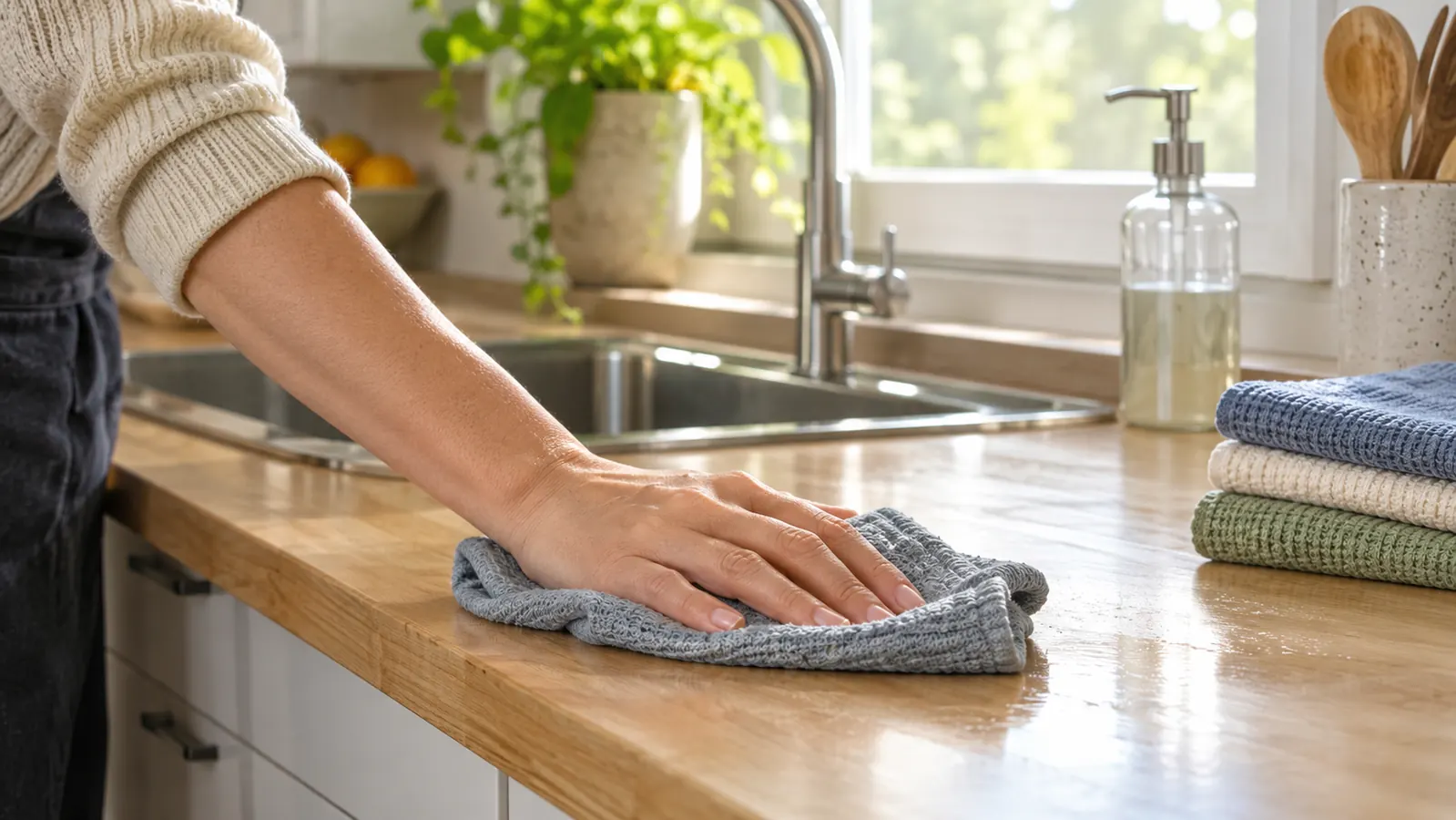
A normal day here goes like this. Coffee, then a wipe of the counter where the grounds spilled. Lunch, then a wipe of the cutting board. Something tracked in from the garden by the back door, then a wipe. Before dinner I rinse whatever cloth I used, wring it out, and drape it over the divider in the sink. Once every few days the whole set goes in the dishwasher, clipped to the top rack so it does not fall through and land on a heating element. The rest of the time they go in with the kitchen towels on laundry day, no fabric softener.
I have also used them for things the package did not promise. Wiping clay soil off terra cotta pots before I brought them in for the winter. Wiping the blades of my pruners after a morning of deadheading. Cleaning the rubber seal on the refrigerator, which is a job I hate and which a damp cloth handles better than a spray bottle and a paper towel ever did.
What These Cloths Actually Are
They are thin. That is the first thing to know. Out of the package the Eulnars cloth feels like a stiff square of cardboard, and I stood there in my kitchen wondering whether I had wasted my money. Then I ran it under the tap and it went soft and floppy in about four seconds. That is cellulose for you. The cloth is 70 percent cellulose, which comes from wood pulp, and 30 percent cotton, and the cellulose is what makes it behave like a sponge instead of a rag.
They measure about 7.8 inches across, so they fit in the palm of your hand when wrung out and cover a good stretch of counter when laid flat. They are reversible, which means no wrong side, and the ones I have carry a geometric pattern printed across them. If you are used to a thick terry bar towel, these will feel like a different species. They are not bar towels. They are sponges that happen to be flat.
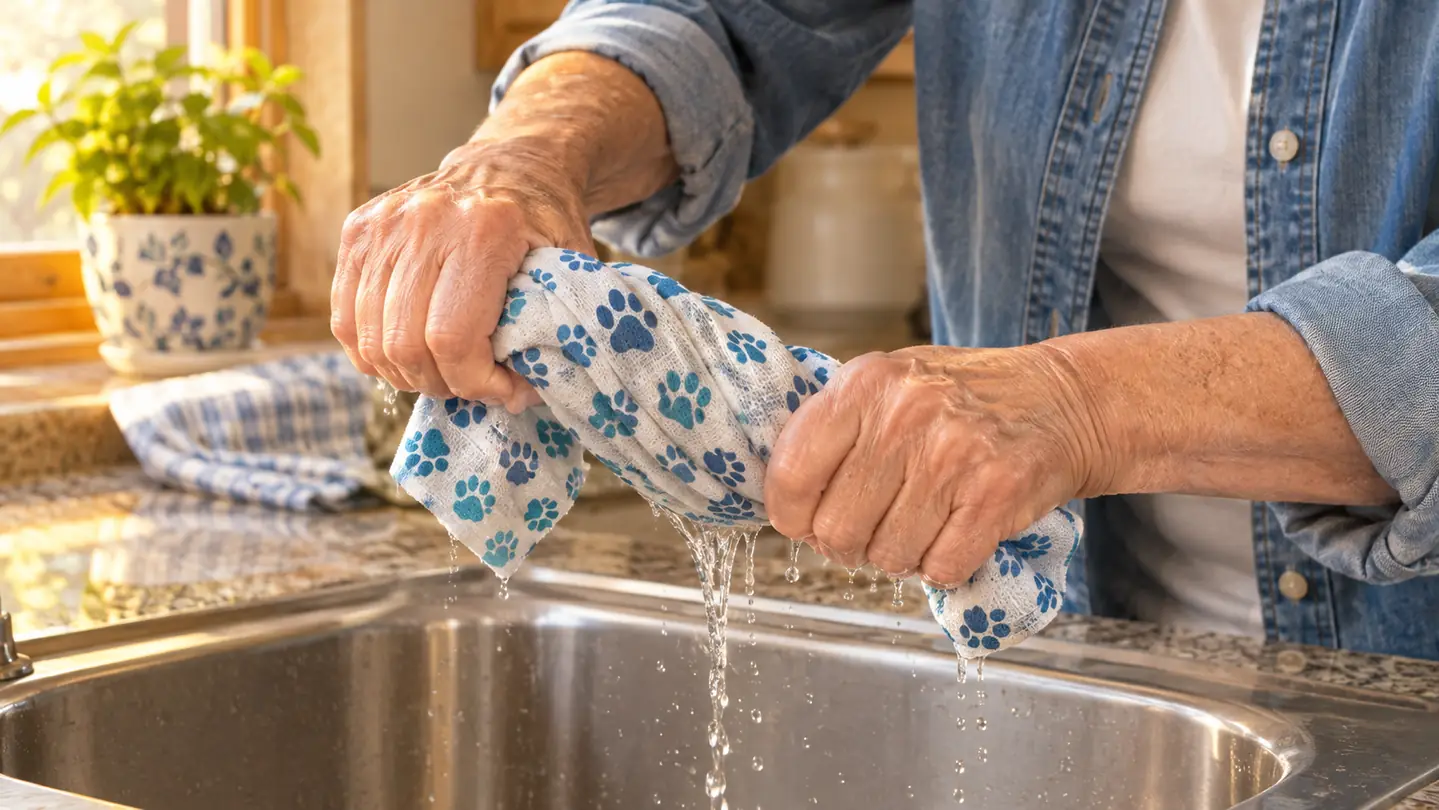
I soaked the first one in a cereal bowl of warm water at the counter and watched it go from a stiff square to something I could wring in about five seconds. Then I wrung it out and it sprang back into a flat rectangle with the creases of my hand still in it. What surprised me is how much water it held without dripping. My old sponge, the one that lived by the sink for years, leaked on the floor every time I carried it to the stove. This one does not, up to a point, and when it is about to give you can feel it coming, because the cloth gets heavy in your hand before anything falls.
The pack comes with clips, which puzzled me until I worked out they are for hanging a wet cloth on a rack or over a bucket rim to dry. I use mine on the dishwasher handle. Small thing, but it keeps a wet cloth off the counter where it would otherwise sit in its own puddle until morning.
The Absorbency Question
Here is where they earn their place in the drawer. I knocked over a full mug of coffee on the counter in February and reached for a paper towel out of habit. I would have used four. One cloth took the whole thing, and when I wrung it out into the sink it gave back most of a cup. That is not a claim off a package. That is me standing at my own sink, surprised.
In March I had a quart pitcher of iced tea on the counter and turned around too fast and took it off the edge. That is a lot of liquid for a wood floor and a base cabinet. I used three Eulnars cloths. The first took the bulk and went into the sink to be wrung, the second took what was left of the puddle, and the third went over the cabinet face and the floor seam where the tea had run. The whole thing was under two minutes and I was not on my hands and knees with a roll of paper, which is exactly what that same afternoon used to look like.
The trick is wringing. A wet cloth holds a surprising amount, and when it is saturated you wring it and keep going. For a big spill I use one cloth, wring it twice, and finish with a dry one to take the last film of water. Two cloths and no paper. It took me about a month to stop reaching for the roll first.
The title says non-scratch, and I have used one on my nonstick skillet with no ill effect, though I am careful with it. As a dish rag it is better than the sponge it replaced, mostly because I can see what is on it. A sponge hides things. A flat cloth does not. They are also better than paper on glass. Paper towels leave lint and streaks on a mirror or a storm door, and these do not. I did the inside of my storm door in April with a damp cloth and a dry one behind it, and it came out clearer than it has in years.
Washing, Odor and How They Wear
The package says dishwasher safe and odor resistant, and I can vouch for both with a caveat. A cloth that has been rinsed and hung to dry smells like nothing at all, even after a week in the rotation. A cloth left in the bottom of the sink overnight with a dish on top of it will smell like a wet basement by morning. The cloth is not at fault there. I have done that twice, and both times it went straight into the dishwasher and came out fine.
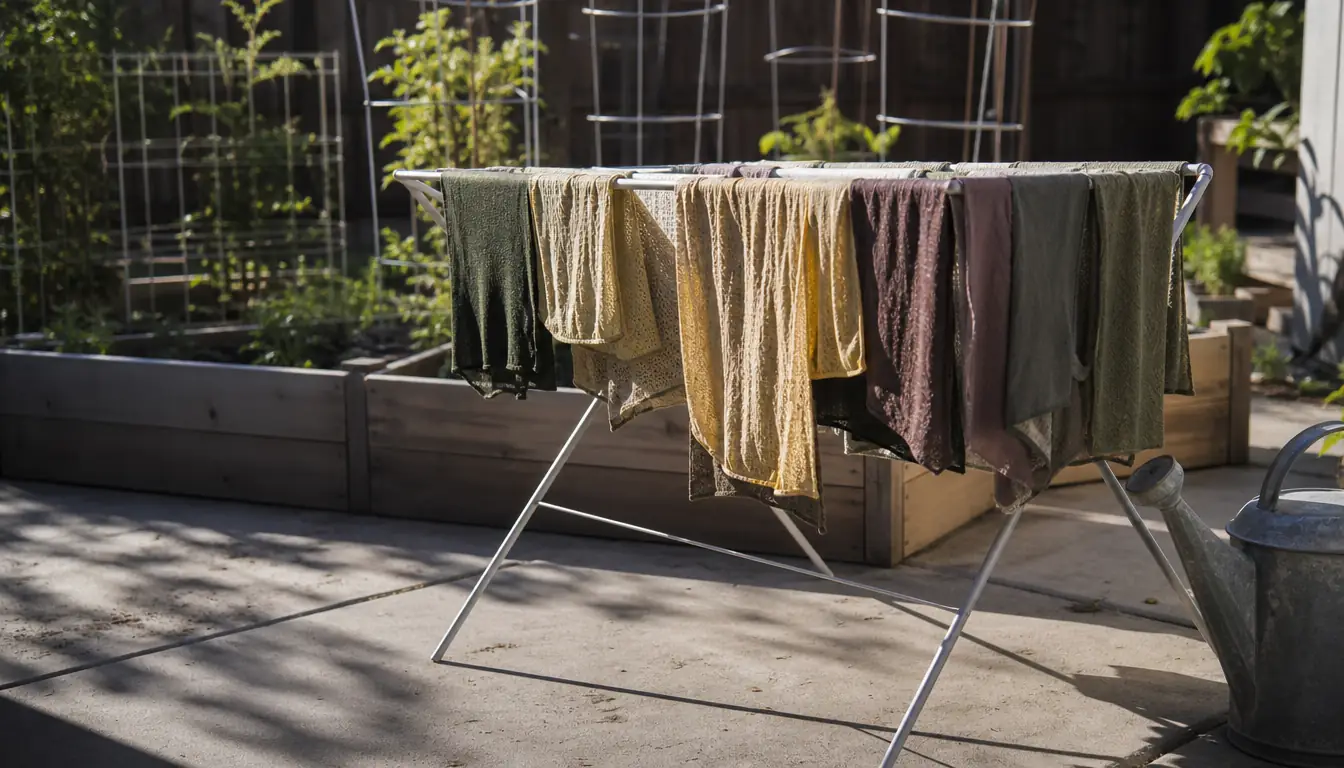
Dishwasher, top rack, clipped down so it does not fly around. Laundry, with the kitchen towels. Both work. Air drying over the faucet or on the rack works too, and the cloth goes stiff as it dries, which I have come to like, because a stiff cloth does not slump into a heap on the counter.
Here is my actual count, because I am the sort of person who counts. I started with eight in January. The rotation has been through the dishwasher somewhere north of thirty times and through the washing machine perhaps a dozen, mostly on days I was doing the kitchen towels anyway. The clip matters more than I expected. A cloth dropped loose onto the bottom rack comes out folded into a wad and sometimes wedged under a plate, and the ones clipped flat to the top rack come out flat and dry by the time I unload. The dishwasher has not faded the printed pattern on mine, which I mention only because I assumed it would.
Wear is the honest part. These are not indestructible. Two of my original eight have retired. One because the edge frayed after a season of being wrung out hard on garden work, and one because it had cleaned up one too many pots of clay soil and had gone thin in the middle. Six are still in rotation and doing the job. Six cloths after the better part of a year, against the paper towels I used to buy every few weeks, is not a close contest.
A word on looks. Whatever a cloth wipes, it keeps a memory of. Mine have wiped coffee, tomato juice, beet liquid and worse, and they are not pretty anymore. I do not care, and if you do, buy the pack anyway and set two cloths aside for when company comes.
In the Garden, Which I Did Not Expect
I bought these for the kitchen. They ended up in the garden more than I expected. Three raised beds and a row of pots on the patio mean a lot of dirty hands and a lot of dirty tools, and a damp cloth is the fastest way to deal with both. I wipe the rim of a pot before I fill it. I wipe the trowel. I wipe the bench where I set things down, because in Loveland the wind puts a fine grit on everything by ten in the morning.
Late March is where it really started. I start seeds on a folding table out on the patio, and every flat gets wiped before it goes out and again when it comes back in at night. Clay soil here is heavy and sticky, and it does not rinse off a tool under the tap the way potting mix does. Wet the cloth, wipe the trowel and the hand fork, wring it out, done. By July, when the zucchini come in faster than I can eat them, I keep one cloth on the potting bench for nothing but garden work, and it does not go back in the kitchen drawer until it has been through the machine.
They handle the small disasters too. A zucchini goes soft in the crisper and leaks, and a cloth takes it. A tomato splits on the counter and a cloth takes that as well. When the hail came through in June and shredded the beans, I used one to wipe down the patio table before I sat there and felt sorry for myself.
Nora approves, which was the point. She counted cloths in my drawer the way she once counted paper towels under the sink, and reported that I had not bought a twelve-pack since February. Caleb, who is twelve and eats as though the baseball season depends on it, uses one to wipe the table after dinner without being asked twice, which may be the strongest endorsement in this house.
Where They Fell Short
Grease. A cloth that has wiped up bacon fat needs hot water and real soap, not a rinse, or it will smear the next thing you touch. It is not a magic eraser and it does not lift cooked-on anything. For the broiler pan I still soak and scrub the way I always did.
Raw meat is the other one. I keep a roll of paper towels in the pantry for chicken juice and for draining bacon, and I am not apologizing for it. The point was never zero paper in the house. The point was a package of paper towels lasting months instead of days.
And the stiffness out of the package will put some people off. My daughter picked one up in February, said it felt like a cracker, and handed it back to me. She has since asked me to pick her up a pack, so take that as you like.
What I Liked
- One cloth handles a spill that used to take four paper towels
- Dishwasher safe on the top rack and machine washable, no fuss either way
- No odor at all when rinsed and hung up to dry
- Eight in the pack means a clean one is always in the drawer
- Non-scratch on pans and better than paper on glass and mirrors
- Handles garden pots, tools and patio grit as well as kitchen counters
Where It Falls Short
- They hold onto stains and stop looking new within a month
- Two of eight frayed or thinned after a season of hard use
- Greasy jobs need hot water and soap, or they smear
- Stiff as a board until they get wet
I have not bought a twelve-pack of paper towels since February, and the drawer under my sink is now mostly cloth.
Who This Is For
This is for the person who has done the paper towel arithmetic and does not like the answer. If you wipe counters a dozen times a day, if you have a garden and dirty hands and a bench that needs wiping, if you want something you can throw in the dishwasher instead of driving to the store, these do that job and they do it for months. Eight cloths in a pack means you are never waiting on laundry. I would buy the Eulnars set again, and I have already told my daughter to do the same.
Who Should Skip It
Skip them if you want a cloth that still looks fresh after a month of coffee, tomato juice and clay soil, because these will not. Skip them if you cannot stand the feel of a stiff square until it gets wet, or if you want one cloth to tackle a greasy broiler pan, because that is a soap-and-soak job no matter what you are holding. And if you are after zero paper towels in your house forever, that was never realistic for me either. I still keep a roll in the pantry for raw meat, and I sleep fine. What these did was turn a package a week into a package a season.
Eight cloths that outlasted the paper towels they replaced
I bought mine last winter and six are still in rotation. Clip them to the top rack, run them through, put them back in the drawer.
Amazon Check Today's Price on Amazon →