
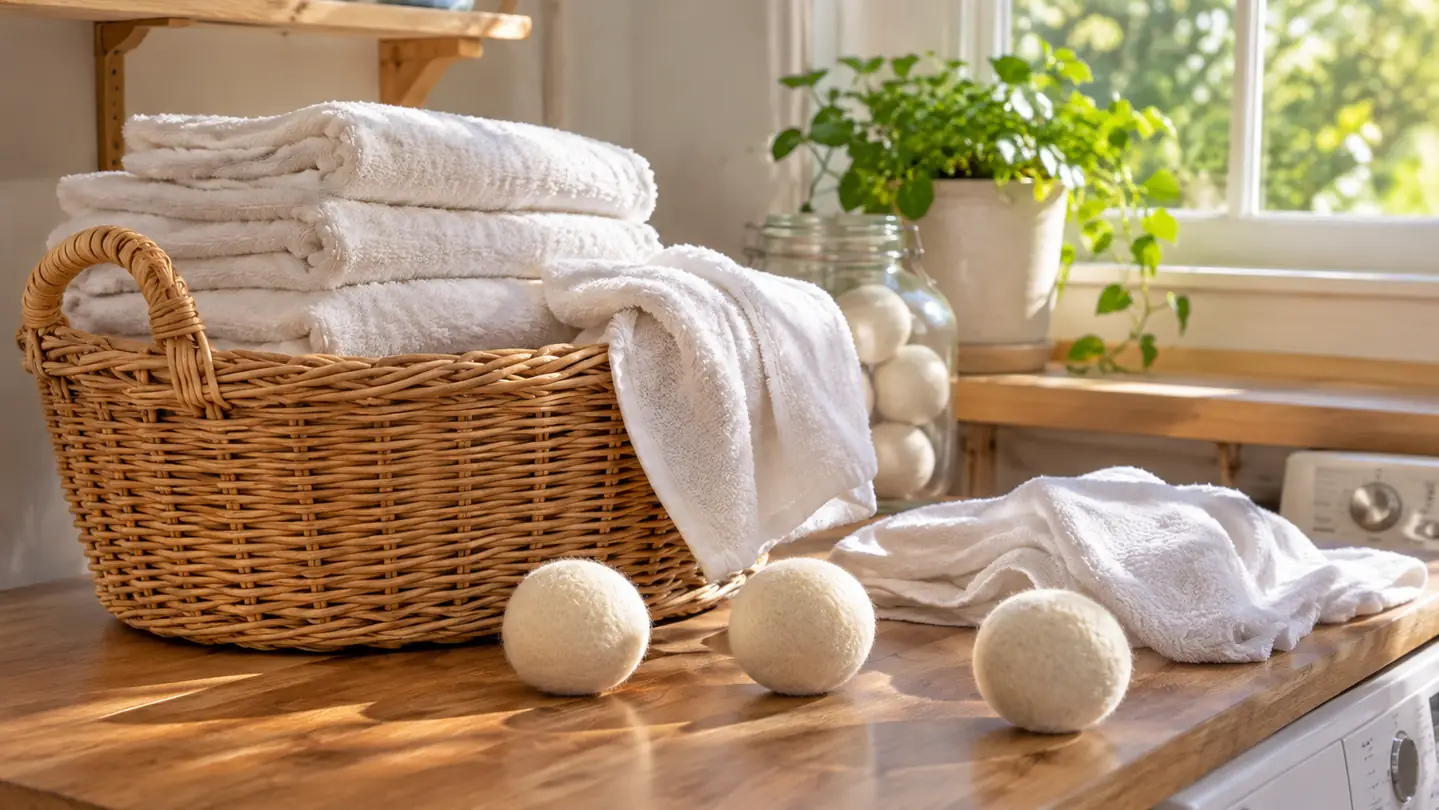
My granddaughter Nora is fifteen and has appointed herself the recycling police of this family. Last September she stood in my laundry room holding an empty box of dryer sheets and read the label out loud, the way she reads everything she disapproves of. I bought a six-pack of Smart Sheep wool dryer balls the following week, mostly to end the lecture and partly because she was right. That was last fall. Those six wool balls have run every load of laundry in this house since, through a Colorado winter, a muddy spring, and a summer of garden rags.
I am sixty-eight, retired after thirty-one years as a school librarian here in Loveland, and I keep a notebook of what I buy and what actually holds up. The Smart Sheep pack has earned its page. What follows is not a pitch. It is what a season and a bit of real laundry looks like with wool in the drum, including the parts I did not expect and the two things that still bother me.
The Quick Verdict
Six wool balls that quietly replaced every dryer sheet in my house, softened my work rags, and shaved a few minutes off each load. After nine months they show no sign of quitting. Static in January is still static.
Amazon Check Today's Price →The six wool balls that ended a thirty-year dryer sheet habit
Six balls, 100 percent New Zealand wool, no fillers. Three for a normal load, five or six for towels and bedding. Check today's price and availability on Amazon.
Amazon Check Today's Price on Amazon →How I've Used It
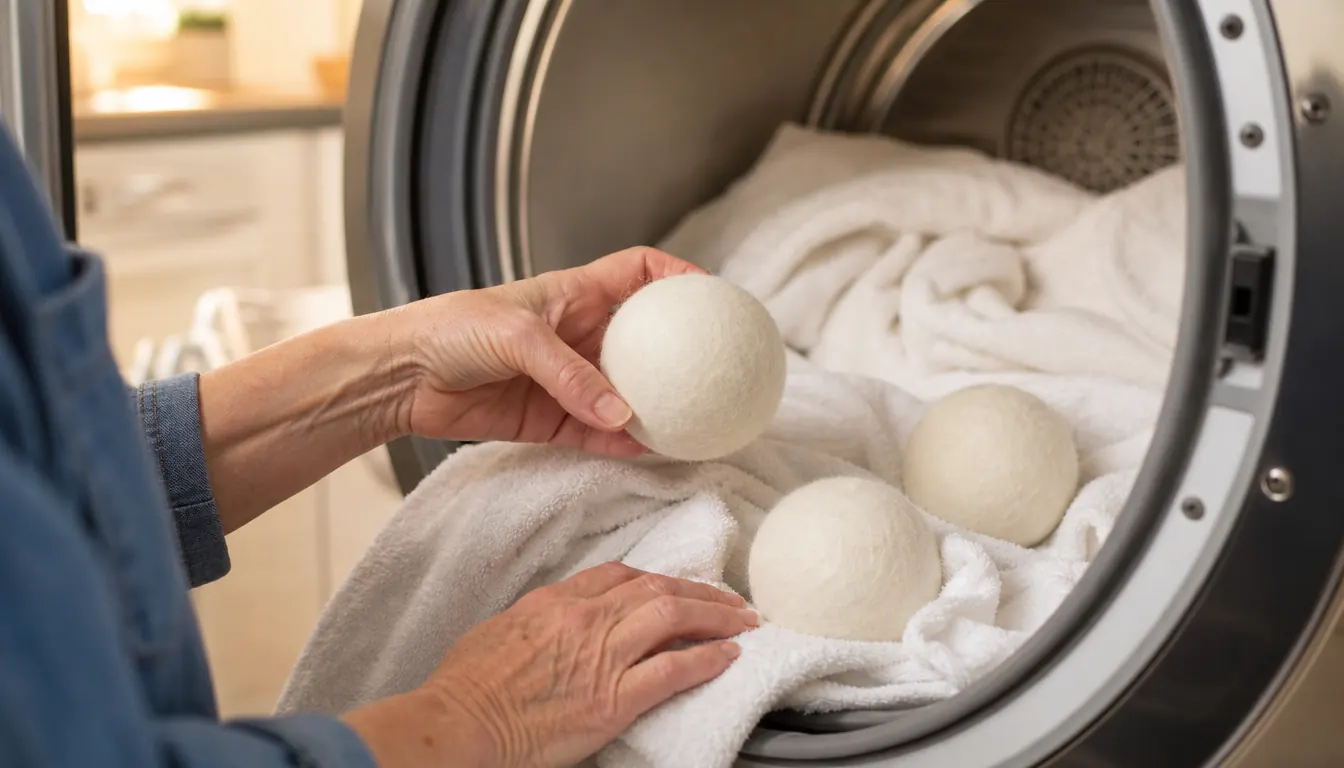
The pack arrived as six wool balls in a box that weighed almost nothing, a little under eleven ounces for the lot according to the listing. There is no booklet and no ritual. The one instruction that matters is printed right there: three balls for a small or medium load, five or six for a large one. I follow that. Three go in for a normal week of shirts, bath towels, and dishcloths. When the sheets come off both beds, or when Caleb's baseball uniform comes in looking like he slid home from the outfield, all six go in.
The first week I was sure I was being gullible. I stood there and watched six balls of wool go around with a load of wet towels and thought about the half-full box of dryer sheets still sitting in the cupboard. Then the buzzer went off and the towels were soft and dry and smelled like nothing at all, and I put the box in the donation bag. That box is still in the donation bag, as a matter of fact, because I keep forgetting to drop it off, which tells you how much I have missed it.
They live in the dryer between loads. I keep them in a small basket on the shelf above the machine, which sounds tidier than it is. For the first month I was finding one behind the dryer every other week. Now I count them back into the basket out of habit, the same way I count the silverware after the grandkids eat.
A note on how many to use. I once put all six into a small load by accident and it worked fine, just louder. I would not go below three, though. Two balls in a full load of towels did nothing I could feel with my hands, and I tried it twice to be fair.
I put a drop or two of lavender oil on one ball every few loads. It is not necessary and it does not last, but it makes the towels smell like something other than hot cotton, and it costs almost nothing. The balls themselves carry no scent and no coating that I can detect, which was the whole point of buying them. When I open the drum there is only the smell of clean fabric and warm air.
What Wool Dryer Balls Actually Change
Four things changed in my laundry room, and one thing did not.
The first is the obvious one: I stopped buying dryer sheets. I had been going through a box roughly every six weeks for years. That is a small, dumb expense I never thought about, and now it is simply gone from the list. The Smart Sheep balls soften by tumbling the fabric apart in the heat instead of coating it with anything. My bath towels come out noticeably less stiff than they used to, and they have kept their absorbency, which was the thing I actually cared about. A towel that repels water is a pointless towel.
The second is drying time. The listing says the balls shorten drying time, and in my machine that has been true, though I would call it a modest saving rather than a transformation. A normal load comes out dry maybe five to eight minutes sooner. I did not time it with a stopwatch. I know because the buzzer catches me in the middle of a chapter now instead of at the end of one. Over a season of loads that adds up to an afternoon or two of my life back, which at my age is not nothing.
The third is lint. Wool balls knock lint loose so it travels into the trap instead of staying on the clothes. I empty the trap after every load anyway, but the volume has gone up and my dark shirts come out with less of a gray haze on them. The navy cardigan I wear to church has lasted longer this year, and I am not going to pretend I have proof of why, but I have my suspicions.
The fourth is that the whole business got quieter in my head. There is no measuring, no sheet to peel apart, no half box going limp on the shelf, no decision about whether this load is worth a whole sheet or half of one. A load of laundry now involves moving six objects from a basket into a drum.
The other thing worth saying is what is not in them. No chemicals, no synthetics, nothing scented. My daughter's youngest had a reaction to a brand of dryer sheets years ago and they have bought unscented everything since. These would have suited them fine. Wool, and that is the entire list. For a house with a baby in it, or a person with skin that objects to everything, that is the whole argument in one sentence.
What did not change is static. I live in Colorado, where January air is dry enough to make a doorknob bite you. The balls reduce static compared with nothing at all, and they do better in deep winter than the sheets ever did, but they do not eliminate it. In February I still pull a flannel nightgown apart and hear it crackle. If static is the reason you are shopping, know that going in.
What I Compared Before Buying
I looked at three things before I ordered, because I am retired and I have the time.
Dryer sheets were the thing I was replacing, so I read the back of the box for the first time in thirty years and did not care for what I found. The balls were the alternative that did not require buying a liquid or a paper product at all.
Plastic dryer balls were cheaper and I almost bought them. What stopped me was my own hand. I picked up a set in the store and they were hard and light and clicked together, and I could not picture them softening a towel. Wool has some give to it. That give is what does the work, as near as I can tell from a season of watching it happen.
A friend suggested tennis balls with the fuzz worn off. I tried two in one load and they thumped like a drum circle and left a faint rubber smell on the sheets. That was the end of that experiment, and I would not recommend it to anybody.
A Season of Loads, and How They Held Up
This was the part I was skeptical about. Wool felted into a ball and thrown into a hot tumbler several times a week should, by any reasonable logic, come apart. Mine have not. After roughly nine months of steady use, the Smart Sheep balls have compacted and gone fuzzy on the surface. They look like well-worn slippers. One of the six has a small matted patch where it keeps striking the same spot in the drum, but it still works, and none of them has shed wool onto a dark load. I checked the dark load specifically, twice, because that was my real worry.
The listing claims a thousand-plus loads. I cannot verify that number and I am not going to pretend I can. What I can tell you is that six wool balls have outlasted every box of dryer sheets I would have bought in the same stretch, and there is no sign they are anywhere near the end of their run.
Care is nothing. They go in wet, they come out dry, they go back in the basket. Once a month I pick the loose fuzz off with my fingers. That is the entire maintenance schedule, and I have managed to keep up with it, which is more than I can say for the gutters.
I would have gone through four or five boxes of dryer sheets by now. I still have the same six wool balls, and they are the least fussy thing in my laundry room.
The Part Nobody Warns You About
Here is what the listing and the reviews did not tell me, and what I would want a friend to know before she orders.
The first is the noise. Six wool balls in a drum are louder than nothing. Not loud, exactly. More of a steady thumping that you notice for a week and then stop hearing. My laundry room is off the kitchen and I got used to it by the second week. If your machine sits against a shared wall or under somebody's bedroom, use three instead of six and it is a good deal quieter.
The second is that they do not do the work of laundry. They soften and they help things dry. A grass stain on Caleb's knee still needs attention before it goes in the drum, and I still sort, which I will do until I die. Nothing about a wool ball changes the part of laundry that is actually labor.
The third is that these are not fabric softener in the sense most people mean. If you are used to the slick, perfumed feel that liquid softener leaves on a towel, you may not like wool. It softens by mechanical action. The towels come out fluffy but they feel like cotton, not like something coated. I prefer it. My daughter tried mine for a week and went back to her liquid because she likes the smell, and that is a fair reason. I am not going to argue her out of it.
One more small thing. Six balls take up room. In a compact machine with a large load, the drum gets tight and the load does not tumble as freely, which is where the softening comes from in the first place. My dryer is generous enough that it has never mattered. If yours is small, start with three and work up.
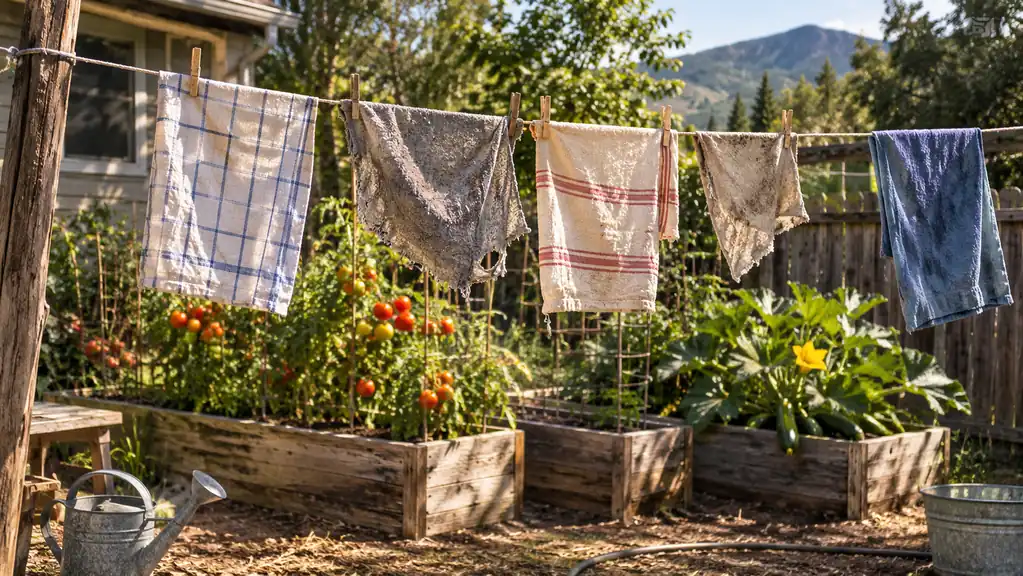
And the place they earned their keep most is not the bath towels. It is the garden. I use old towels and cut-up rags for wiping down pots, drying tools, and mopping the patio after rain. Those rags used to come out of the dryer stiff enough to stand up on their own. Now they come out soft enough to fold. In a house where half the laundry is functional rather than decorative, that difference matters more than it sounds.
What I Liked
- Replaced dryer sheets entirely. One less thing on the shopping list.
- Softens towels and work rags without any coating, scent, or chemical residue.
- Knocks five to eight minutes off a normal load, which adds up over a season.
- Six balls handle both a midweek load and a full set of bedding.
- No visible wear beyond normal fuzzing after roughly nine months of steady use.
Where It Falls Short
- Static in dry Colorado winters is reduced, not eliminated.
- Six balls in a drum make a steady thumping you will notice at first.
- No scent at all. If you like perfumed laundry, this is not that.
- They do nothing for stains or sorting, which is most of the actual work.
Who This Is For
This is for the person who is tired of buying a box of dryer sheets every six weeks and has quietly wondered what is in them. It is for anyone with sensitive skin, or a baby in the house, or a granddaughter who reads labels out loud. It is for a household like mine, where half the laundry is towels and rags and clothes that got dirty outdoors, and nobody is expecting a perfume counter at the end of it.
It is also for the person who wants one small, boring change instead of a whole new system. I am not an activist and I am not going to lecture you about the landfill. I bought these because Nora was right and because I was tired of the box. That is the entire reason, and it has been enough.
Who Should Skip It
Skip it if you love the smell of dryer sheets. Genuinely. Wool does not scent anything, and a drop of lavender oil on a ball is not the same as a sheet. Skip it if your dryer backs up to a shared wall and a steady thump would be a problem. And skip it if you are not willing to count six balls back into a basket now and then.
And skip it if you are expecting a dramatic difference. This is a modest change. The towels are softer, the loads are five or eight minutes shorter, and a small recurring purchase disappeared from my list. That is the whole of it. It has been worth it to me for a season, and I will keep using them until they wear out, which at this rate will be a while yet.
Six wool balls, one less box on the grocery list
100 percent New Zealand wool, no fillers. Three balls for a normal load, five or six for a big one. Check today's price and current availability on Amazon.
Amazon Check Today's Price on Amazon →